Bahasa Melayu: Seeing Images With Closed Eyes and What They May Mean
Bahasa Melayu localized draft. Seeing images when the eyes are closed is often a brief visual event rather than proof of a hidden message or a serious condition. People may notice dots, colors, faces, scenes, afterimages, or dreamlike clips when external light is reduced. It can feel curious, annoying, spiritual, frightening, or simply odd. For the self-reflection side, use a localized visual imagery self-reflection tool, while medical, sleep, or mental health worries belong with qualified care.
What People Mean by Seeing Images When Eyes Are Closed
The phrase covers several experiences. It may mean faint speckles, swirling color, a copied afterimage from a screen, or vivid images that arrive near sleep. These differences matter because timing, detail, and context change the likely explanation.
- Light, color, sparkles, or geometric forms often fit ordinary closed-eye visual activity.
- A shape copied from something recently seen may be an afterimage.
- Vivid images while falling asleep may be sleep-transition imagery.
- Repeated, distressing, or disruptive images deserve more attention, especially with other symptoms.
Common Closed-Eye Visuals: Phosphenes, Colors, and Afterimages
Phosphenes are flashes, dots, stars, shapes, or colors that appear without a matching outside object. They can become more noticeable with eyelid pressure, rubbing, bright light, fatigue, migraine tendency, or some eye conditions. Afterimages are different: after looking at a bright or high-contrast object, the visual system can briefly keep a shape or reversed color.
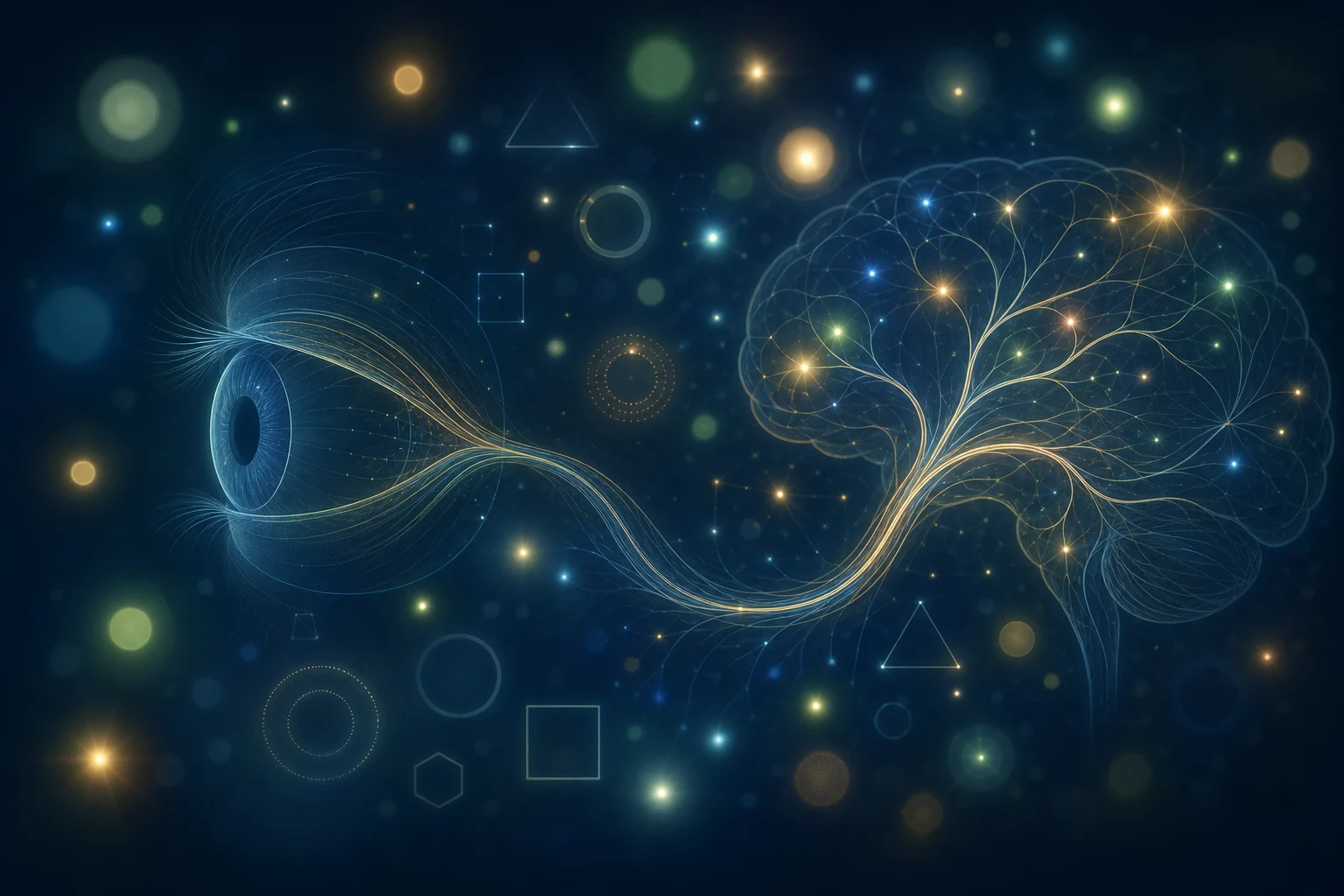
Why Random Images May Appear Before Sleep
Images that appear while you are drifting into sleep may feel more vivid than deliberate imagination. The brain is moving from waking perception toward dreaming, so faces, rooms, landscapes, or sudden scenes can appear and vanish quickly. A scary image at this point does not define your character or beliefs.
- Reduce bright screens and intense visual content before bed.
- Keep a regular sleep window when possible.
- Use a quiet, dim wind-down routine.
- Open your eyes, orient to the room, and breathe slowly if an image alarms you.
Closed-Eye Hallucinations, Schizophrenia, ADHD, and Other Search Concerns
Search results often mix ordinary closed-eye visuals with schizophrenia, ADHD, medication effects, neurological problems, psychedelics, and psychosis. One moment of color behind closed eyelids does not define schizophrenia or ADHD. Seek appropriate care if images are new, intense, hard to separate from reality, occur with eyes open, or come with confusion, seizures, severe headache, substance changes, or vision symptoms.
Are Closed-Eye Images Spiritual?
Some people interpret closed-eye images spiritually because they feel symbolic, bright, or emotionally charged. Personal meaning can be held gently, especially during meditation, prayer, grief, or stress. A balanced approach also checks ordinary causes such as fatigue, light exposure, eye pressure, migraine, and sleep transition.

How Closed-Eye Visuals Relate to the Mind's Eye
Closed-eye visuals are not the same as voluntary mental imagery. A phosphene can appear by itself, an afterimage can copy recent light, and a sleep-transition image can drift in without effort. Mental imagery usually means intentionally forming or recalling a picture. A localized mind's eye exploration guide can help compare deliberate imagery with closed-eye events.
How to Stop Closed-Eye Hallucinations From Taking Over Your Attention
You may not stop every image, but you can reduce the attention and fear it receives. Name the likely category, avoid pressing on the eyes, relax the jaw and shoulders, and shift to a neutral sensory anchor such as a blanket, breathing, or room sound.
- Open your eyes and identify three ordinary objects.
- Let the moment pass instead of checking whether the image is gone.
- Keep a simple log if the same image repeats with sleep loss, stress, medication, migraine, or substance changes.
When to Get Help and What to Explore Next
Most closed-eye visuals are brief and easier to handle once possible causes are understood. Consider professional guidance if the pattern is new and persistent, happens with eyes open, follows a head injury, includes eye pain or vision changes, causes major anxiety or insomnia, or appears with strong changes in mood, thinking, or daily functioning. For reflection, an localized imagery spectrum self-check can support insight without replacing qualified care.
FAQ
Is it normal to see images when you close your eyes?
Yes. Brief colors, patterns, sparkles, afterimages, or dreamlike scenes can be normal. New, frequent, distressing, or symptom-linked visuals deserve more attention.
Is it normal to see afterimages when you close your eyes?
Yes. They can happen after bright light, screens, windows, or high-contrast shapes and usually fade. Sudden flashes, new floaters, pain, blurry vision, double vision, or head injury need eye care.
Why do I see disturbing images when I try to sleep?
They may relate to the transition between wakefulness and dreaming, especially with stress, sleep loss, or overstimulation. Calm routines and reduced screen intensity may help.
What do schizophrenic visual hallucinations look like?
They vary widely and may seem real, but schizophrenia is not determined by one closed-eye image. Persistent hallucinations, unusual beliefs, confusion, or functional decline deserve professional support.
Can people with aphantasia still see closed-eye visuals?
Yes. Aphantasia concerns voluntary imagery, while phosphenes, afterimages, and sleep-transition visuals can occur without intentional picture-making.
How do I know whether closed-eye images are imagination or hallucination?
Ask whether you chose the image, whether it appears during relaxation or sleepiness, whether it feels external and real, and whether it disrupts daily life.
How can I make closed-eye visuals less scary?
Open your eyes, orient to the room, avoid eye pressure, breathe slowly, and treat the image as a passing visual event. Seek support if fear or insomnia keeps building.