What is Aphantasia? Your Ultimate Guide & Take the Aphantasia Test
Have you ever been told to "picture a sunny beach" and found yourself seeing only blackness? Do you struggle to visualize the faces of loved ones? This internal world of images, often called the "mind's eye," is a vibrant canvas for many, but for some, it remains blank. If this sounds familiar, you've come to the right place. Welcome to this ultimate guide on aphantasia, where we'll explore its nuances and help you discover how to assess your own visual imagination. Ready to find out how to tell if you have aphantasia? Let's start your journey of self-discovery with a reliable aphantasia test.
What is Aphantasia? Understanding the Mind's Eye
Aphantasia is a fascinating way some people's minds work, yet many don't even know it exists. It's not a disorder or a defect but a unique variation in how our brains process information. Understanding its definition and where it lies on the spectrum of imagination is the first step toward appreciating this distinct way of thinking. This understanding can be a profoundly validating experience for those who have always felt different.
Defining Aphantasia: A Lack of Mental Imagery
At its core, aphantasia is the inability to voluntarily create mental images. When someone with aphantasia tries to imagine an apple, they understand the concept—they know it's round, can be red or green, and has a stem—but they don't see an apple in their mind. Their thoughts might be composed of facts, words, or abstract concepts rather than visual pictures. This is often referred to as having a mind's eye that is "blind." It's a natural variation, much like having different eye colors, and affects a small but significant portion of the population.
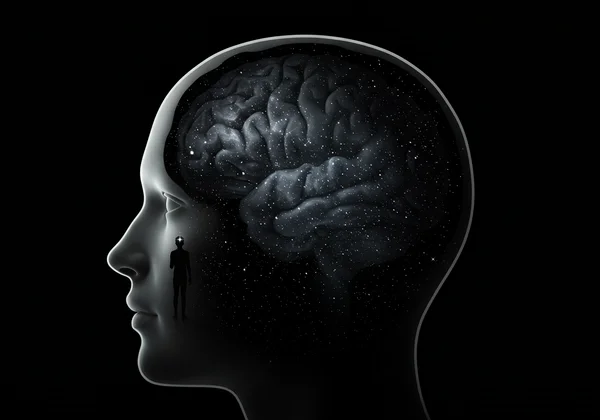
Exploring the Spectrum: From Aphantasia to Hyperphantasia
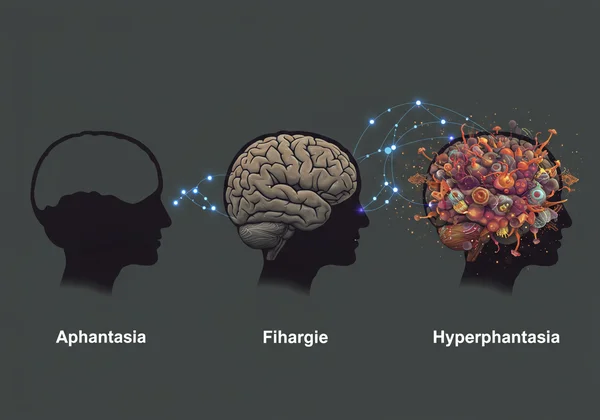
Visual imagination isn't a simple on-or-off switch; it exists on a vast spectrum. On one end, you have total aphantasia, characterized by a complete absence of mental visuals. On the opposite end is hyperphantasia, where individuals experience mental imagery that is as vivid and detailed as real life. Most people fall somewhere in between, with varying degrees of clarity and control over their mental pictures. Recognizing this spectrum is crucial because it helps frame aphantasia not as a deficiency, but as one point on a diverse continuum of human experience. You can explore your mind's eye to see where you might fall.
How to test for aphantasia: Reliable Self-Assessment Tools
If you suspect you might have aphantasia, the natural next question is how to confirm it. While there is no clinical diagnosis, several reliable tools can help you gauge the vividness of your visual imagination. These self-assessments provide valuable insights into your cognitive style, offering a framework for understanding your unique way of thinking and processing the world.
The VVIQ Test Online: Visual Vividness Assessment Explained
One of the most established methods for measuring imagination is the Vividness of Visual Imagery Questionnaire (VVIQ). Developed by psychologist David Marks in 1973, this questionnaire asks you to rate the vividness of various imagined scenarios, from thinking of a friend to picturing a rising sun. The VVIQ provides a standardized score that helps place your imaginative ability on the spectrum. This visual imagery vividness test has been a cornerstone in cognitive science research for decades, lending scientific credibility to the self-assessment process.
Simple Aphantasia Self-Assessment: What to Expect from Our Tool
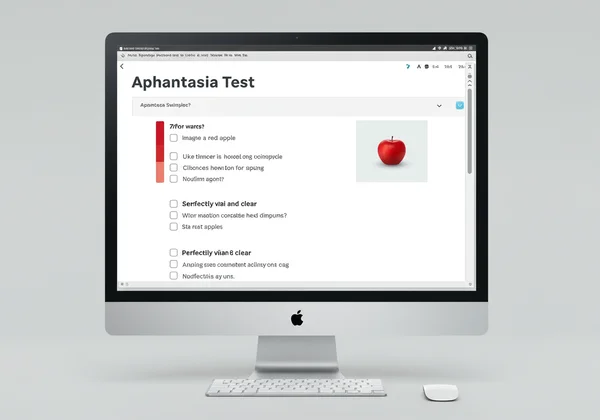
To make this journey of discovery more accessible, we’ve developed a straightforward and user-friendly online aphantasia test. Our test is inspired by the principles of the VVIQ but is designed for clarity and ease of use. You'll be guided through a series of questions that prompt you to visualize different objects and scenes. The process is quick, intuitive, and designed to give you a clear, immediate understanding of your mind's eye. This simple aphantasia test is the perfect starting point.
Why Take Our Free Aphantasia Test at Aphantasiatest.com?
Choosing the right tool is important. Our free aphantasia test offers several key advantages. It is entirely free, ensuring everyone has access to this valuable self-knowledge. The questions are inspired by established scientific principles, ensuring your results are reliable and meaningful. Most uniquely, after completing the initial assessment, you have the option to unlock a personalized, AI-powered deep analysis report. This exclusive feature provides deeper insights into your cognitive profile, helping you understand your potential strengths and challenges. Start your assessment today to gain a clearer picture of your inner world.
Living with Aphantasia: Challenges, Strengths, and Strategies
Discovering you have aphantasia can be a revelation, explaining lifelong quirks and difficulties. But it's also an opportunity to recognize the unique strengths that often accompany this cognitive style. Living with aphantasia isn't about overcoming a deficit; it's about leveraging your distinct way of thinking to navigate the world effectively and creatively.
Aphantasia's Impact on Memory and Recollection
Many people with aphantasia report a different kind of memory. Instead of re-living a moment through visual flashbacks, they might remember facts, feelings, and a sequence of events. This is known as semantic memory rather than episodic memory. While they may struggle to recall specific visual details, they often excel at retaining conceptual information. Understanding this difference is key to appreciating how they process and store their life experiences.
Creativity and Problem-Solving: The Aphantasic Advantage
It’s a common misconception that a lack of visual imagery equates to a lack of creativity. This couldn't be further from the truth. Many individuals with aphantasia thrive in highly creative and technical fields like engineering, mathematics, and writing. Their strength often lies in abstract, conceptual, and logical thinking. By not being tied to specific images, their minds are free to connect ideas and solve problems in novel and efficient ways. Ed Catmull, a co-founder of Pixar, is a famous example of a highly successful creative with aphantasia.
Navigating Daily Life: Reading, Dreams, and Relationships
Aphantasia can influence various aspects of daily life. When reading a novel, an aphantasic person might focus on the plot, dialogue, and emotional arcs rather than visualizing the scenes. Many report not having visual dreams, or at least not remembering them. In relationships, they might struggle to picture a partner's face when they are away but can remember their love and connection through other means. The key is adaptation, finding alternative strategies to engage with a visually-oriented world.
Aphantasia & Neurodiversity: Connections and Distinctions
Aphantasia is increasingly recognized as part of the broader tapestry of neurodiversity—the idea that variations in brain function are natural and should be respected. Exploring its relationship with other neurodivergent traits like autism and ADHD can provide a more holistic understanding of the human mind. It's crucial, however, to approach these connections with nuance and scientific accuracy.
Is Aphantasia a Type of Autism? Exploring the Links
A frequently asked question is whether aphantasia is a form of autism. The short answer is no. Aphantasia and Autism Spectrum Disorder (ASD) are distinct neurological profiles. While some studies suggest a higher prevalence of aphantasia among individuals with autism, many people have one without the other. They can co-occur, but one does not cause or define the other. Both are simply examples of the brain's incredible diversity.
Aphantasia and ADHD: Overlap or Co-occurrence?
Similarly, people wonder about the connection between aphantasia and Attention-Deficit/Hyperactivity Disorder (ADHD). Research in this area is still emerging. Some anecdotal reports suggest an overlap, but there is not yet enough scientific evidence to establish a direct link. It's more helpful to view them as separate traits that can sometimes exist in the same person, each influencing their cognitive experience in different ways.
Understanding Neurodivergence: Aphantasia's Place
Viewing aphantasia through the lens of neurodiversity is empowering. It shifts the conversation from "What's wrong?" to "How does my brain work?" It acknowledges that there is no single "correct" way to think, remember, or imagine. Aphantasia is not a condition to be fixed but a cognitive signature to be understood. Accepting this can foster greater self-acceptance and encourage society to value all forms of thinking. To better understand your own cognitive style, you can take the aphantasia test.
Your Journey into the Mind's Eye Continues
Your journey into understanding aphantasia is a journey of self-discovery. It’s about recognizing that your inner world, whether filled with vivid pictures or abstract concepts, is valid and unique. By exploring the spectrum of imagination, you can better appreciate your own cognitive strengths and navigate the world with greater confidence, empowering you to understand both yourself and others on a deeper level.
Are you ready to explore your mind's eye? The first step is often the most revealing. We invite you to take our free test today. Gain immediate insights into your visual imagination and unlock a deeper understanding of what makes you, you.
Disclaimer: This article is for informational purposes only and is not a substitute for professional medical advice, diagnosis, or treatment. If you have concerns about your health or cognitive function, please consult a qualified professional.
Frequently Asked Questions About Aphantasia
What are common traits of people with aphantasia?
Common traits include difficulty visualizing faces, scenes, or objects voluntarily. Many report having a memory based on facts rather than pictures, and they may not experience visual dreams. However, they often have strong conceptual, logical, or verbal thinking skills.
Do people with aphantasia have an inner monologue?
Yes, the vast majority of people with aphantasia have a strong inner monologue. Aphantasia specifically relates to the absence of visual imagery; it does not typically affect the internal voice or other sensory imagination (like sound, touch, or taste).
How do people with aphantasia remember things?
People with aphantasia often rely on semantic memory—recalling facts, information, and concepts. Instead of "re-playing" a memory like a movie, they might remember a list of events that occurred, the emotions they felt, and the words that were spoken. Their memory is often less visual but can be just as accurate.
Can people with aphantasia enjoy reading?
Absolutely. While they may not visualize the characters and settings, they can deeply engage with the plot, character development, emotional journey, and intricate prose. Their enjoyment comes from a conceptual and emotional understanding of the story rather than a mental movie.
Is aphantasia neurodivergent?
Yes, aphantasia is widely considered a form of neurodivergence. It represents a natural variation in human brain function, just like dyslexia or synesthesia. It is not a disorder but a different, equally valid way of experiencing the world. To find out more, try our free tool.