The Aphantasia Test & Your Brain: Neuroscience of the Mind's Eye
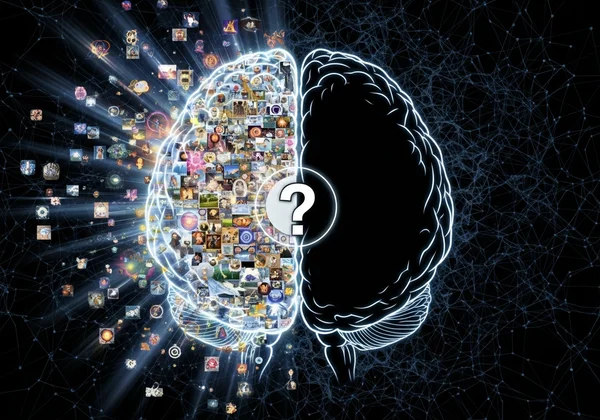
Have you ever closed your eyes to picture a loved one's face, only to find a void of darkness? Or can you conjure images so vivid they feel real? This fascinating difference in our internal experiences lies at the heart of the aphantasia brain. For many, the "mind's eye" is a given, but for you, it might be an abstract idea. This deep dive explores the neuroscience behind visual imagery and what it means for you. If you're wondering about your own abilities, a great place to start is with a reliable aphantasia test. This simple aphantasia self-assessment is the first step to understanding your unique mind.
Understanding the Aphantasia Brain
Aphantasia is not a disorder or a deficit; it's a variation in human cognition. It describes the experience of those who do not have a functioning mind's eye, meaning they cannot voluntarily produce mental images. While the term is relatively new, the experience is not. For centuries, people have lived full, creative, and successful lives without the ability to visualize. Understanding the science behind it helps demystify the experience and fosters a greater appreciation for the diverse ways our brains work.
Defining Aphantasia: More Than Just "Mind Blindness"
The term "mind blindness" is often used to describe aphantasia, but it can be misleading. Aphantasia specifically relates to the absence of voluntary visual imagery. People with aphantasia can still recognize faces, navigate their environment, and recall facts. Their memory and conceptual understanding are typically intact; they just don't access these memories through pictures. Instead, they might rely on semantic memory (facts and concepts), kinesthetic memory (feelings and movements), or an inner monologue. It is a difference in processing, not a failure of it.
The Spectrum of Visual Imagery: From Aphantasia to Hyperphantasia
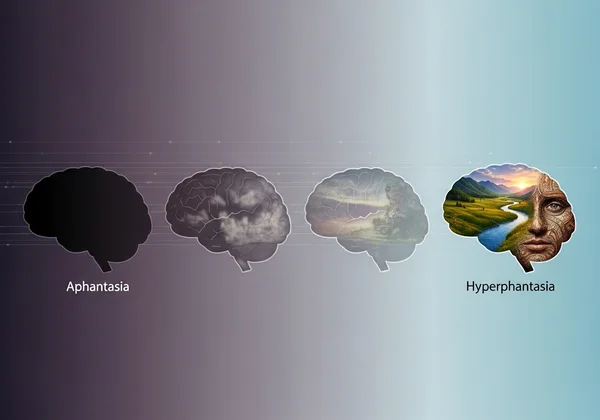
It's crucial to understand that visualization isn't an on-or-off switch. It exists on a vast spectrum. On one end, you have total aphantasia, where no mental imagery is present. On the opposite end is hyperphantasia—extremely vivid, photorealistic mental imagery. Most people fall somewhere in between, with images of varying clarity. Scientifically, this is often measured with tools like the Vividness of Visual Imagery Questionnaire (VVIQ). Taking an aphantasia test can be an enlightening experience, and our quality online aphantasia test is designed to help you discover exactly where you fall on this fascinating spectrum.
The Neuroscience of Visual Imagery
Why can some people visualize while others can't? The answer lies in the intricate wiring of our brains. The ability to create a mental picture is a complex process involving multiple brain regions working in concert. Neuroscientists are now using advanced imaging techniques to map out these processes and understand what makes the aphantasic brain unique. This growing body of aphantasia science offers fascinating insights into the connection between our thoughts and our internal sensory world.
Key Brain Regions for Mental Pictures
When you visualize an apple, you're activating a network of brain regions. The frontal lobe, which governs executive functions, initiates the request. This signal travels to the parietal lobe, which helps manage spatial awareness, and the temporal lobe, which retrieves memories of what an apple looks like. Crucially, these areas communicate with the occipital lobe—specifically the visual cortex at the back of your brain. This is the same region that processes information from your eyes. In essence, mental imagery is like running the visual system in reverse, generating a picture from memory instead of external light.
Neural Pathways: How Thoughts Become Images (or Don't)
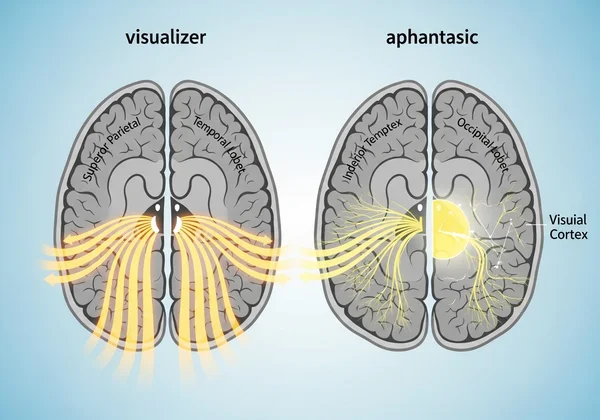
For a mental image to form, a seamless top-down signal must flow from higher-order cognitive centers (like the frontal lobe) to the primary visual cortex. Think of it as a manager telling an artist to paint a picture. In individuals with strong visualization, this communication is robust. Research suggests that in the aphantasic brain, this pathway may be weaker or function differently. The 'manager' might send the order, but the 'artist' either doesn't receive it or can't execute it, leaving the mental canvas blank. The results from an aphantasia test can often reflect the efficiency of these unique neural pathways. You can explore your mind's eye to see how your own pathways function.
What Functional Brain Scans Reveal About the Aphantasic Mind
Studies using functional magnetic resonance imaging (fMRI) provide concrete evidence for these differences. When asked to imagine an object, individuals with typical imagery show increased activity in their visual cortex. In contrast, many people with aphantasia show significantly less activation in this area. Their brains are trying to complete the task, but the final, visual component doesn't light up. This doesn't mean their brain is broken; it simply means it has found alternative, non-visual pathways to process and recall information. These findings scientifically validate the experiences people report after taking an aphantasia test.
Exploring the Causes of Aphantasia
One of the most common questions people have is about the causes of aphantasia. Is it something you're born with, or does it develop over time? After taking an aphantasia test, many wonder why their mind works this way. Like many cognitive traits, the answer is complex. There appear to be multiple origins for aphantasia, and scientific research is actively exploring both congenital and acquired forms of the condition. Understanding these potential causes helps paint a fuller picture of this unique neurological trait.
Developmental vs. Acquired Aphantasia: Different Origins
The vast majority of people with aphantasia report having it for as long as they can remember. This is known as congenital or developmental aphantasia. They were simply born with a brain wired this way. However, a smaller number of individuals develop aphantasia later in life, a condition known as acquired aphantasia. This can be triggered by a brain injury, stroke, surgery, or sometimes following periods of psychological distress like depression or anxiety. Studying both types helps researchers isolate the specific brain networks involved in visualization.
Genetic Factors and Family Connections
Emerging evidence suggests that aphantasia may have a genetic component. Many people with aphantasia report having close family members who share the same experience. This indicates that certain genetic predispositions might influence the development of the neural pathways necessary for mental imagery. While a specific "aphantasia gene" has not yet been identified, the familial link is a strong area of ongoing research. If you suspect you have aphantasia, you might find that others in your family do too.
Cognitive Links: Aphantasia and Other Neurodivergent Traits
There is growing interest in the relationship between aphantasia and other neurodivergent traits like Autism Spectrum Disorder (ASD) and Attention-Deficit/Hyperactivity Disorder (ADHD). It's important to be clear: aphantasia is not a type of autism or ADHD. It is a distinct trait. However, some studies suggest that aphantasia may occur more frequently in neurodivergent populations. This doesn't imply causation but points to the fascinating possibility that different neurotypes may share underlying differences in brain connectivity. The best way to understand your unique cognitive profile is through self-discovery. An aphantasia test is not a diagnosis, but a tool for exploration. You can begin that journey with our free aphantasia test.
Embracing Your Brain's Unique Landscape
Learning about the aphantasic brain isn't about identifying a flaw—it's about celebrating your own cognitive diversity. Whether your mind is a bustling cinema of images or a quiet library of facts, it has developed a remarkable system for navigating the world. Neuroscience confirms aphantasia is a genuine, biologically-based variation.
Truly understanding your own mind is an incredible adventure. What discoveries await you in the landscape of your inner world? If you're curious about your capacity for visual imagery, taking that first step is easier than you think. Embark on your journey of self-reflection today: start your test now. Completing an aphantasia test is a powerful moment of discovery for many.
Common Questions About the Aphantasic Brain
Is Aphantasia a Type of Neurodivergence?
While not officially classified like ADHD or autism, many people with aphantasia consider themselves neurodivergent. Neurodiversity is the simple idea that variations in brain function are natural and should be respected. Aphantasia fits perfectly within this framework as a distinct difference in cognitive processing. An aphantasia test is often the first step people take in recognizing their own neurodivergence.
What Do People with Aphantasia Dream?
This varies from person to person. Some people with aphantasia report dreaming without any visual component—they just 'know' what is happening and feel emotions or other sensations. Others do report visual dreams, suggesting the brain systems for voluntary and involuntary imagery might be separate. There is no right or wrong answer here, as every aphantasic experience is unique.
How Can I Tell If I Have Aphantasia?
The simplest way is through introspection. Try to picture an apple. Can you see it in your mind? What color is it? Is it shiny? If you can't form any kind of mental image, you might have aphantasia. For a more structured and insightful evaluation, a reliable aphantasia test provides a clear picture of your abilities. Our online aphantasia test is designed for this exact purpose.
Are There Any Recognized Causes of Aphantasia?
The primary recognized causes are congenital (being born with it) and acquired (developing it after a brain injury or psychological event). Research also points to a strong genetic link, as aphantasia often runs in families. Taking an aphantasia test can be your first step in understanding your personal cognitive style, regardless of its origin. Many people find answers simply by taking our visual imagery test and exploring the results.
Disclaimer: This article is for informational purposes only and is not a substitute for professional medical advice, diagnosis, or treatment. If you have concerns about your health or cognitive function, please consult a qualified professional.