See Images When Eyes Closed: What Closed-Eye Visuals Can Mean
If you see images when eyes closed, you are not automatically looking at a serious problem or a hidden message. Many people notice dots, colors, faces, scenes, afterimages, or quick dreamlike clips when external light is reduced and the mind has fewer visual inputs to process. The experience can feel fascinating, annoying, spiritual, scary, or simply strange. It can also raise a second question: how does this relate to your mind's eye when you imagine things on purpose? A gentle way to explore that side of the question is through a visual imagery self-reflection tool, while treating medical, sleep, or mental health concerns as separate issues for qualified care.
What People Mean by Seeing Images When Eyes Are Closed
People use the phrase in several different ways. One person may mean faint speckles or swirling colors. Another may mean a sharp afterimage of a lamp, screen, or window. Someone else may mean vivid, random images that appear while falling asleep. A few people describe complex scenes, faces, or moving figures that feel more like hallucinations than imagination.
Those differences matter because "closed-eye images" is a broad everyday phrase, not one single event. A useful first step is to sort the experience by timing, detail, and context:
- Light, color, sparkles, or geometric patterns often fit the category of phosphenes or normal closed-eye visual activity.
- A copied outline of something you just looked at may be an afterimage.
- Vivid images while drifting into sleep may be hypnagogic imagery.
- Repeated, distressing, or life-disrupting images deserve more attention, especially if they occur with other symptoms.
The goal is not to label yourself quickly. It is to notice enough detail that you can respond calmly and decide whether simple reassurance, sleep support, eye care, or professional guidance makes sense.
Common Closed-Eye Visuals: Phosphenes, Colors, and Afterimages
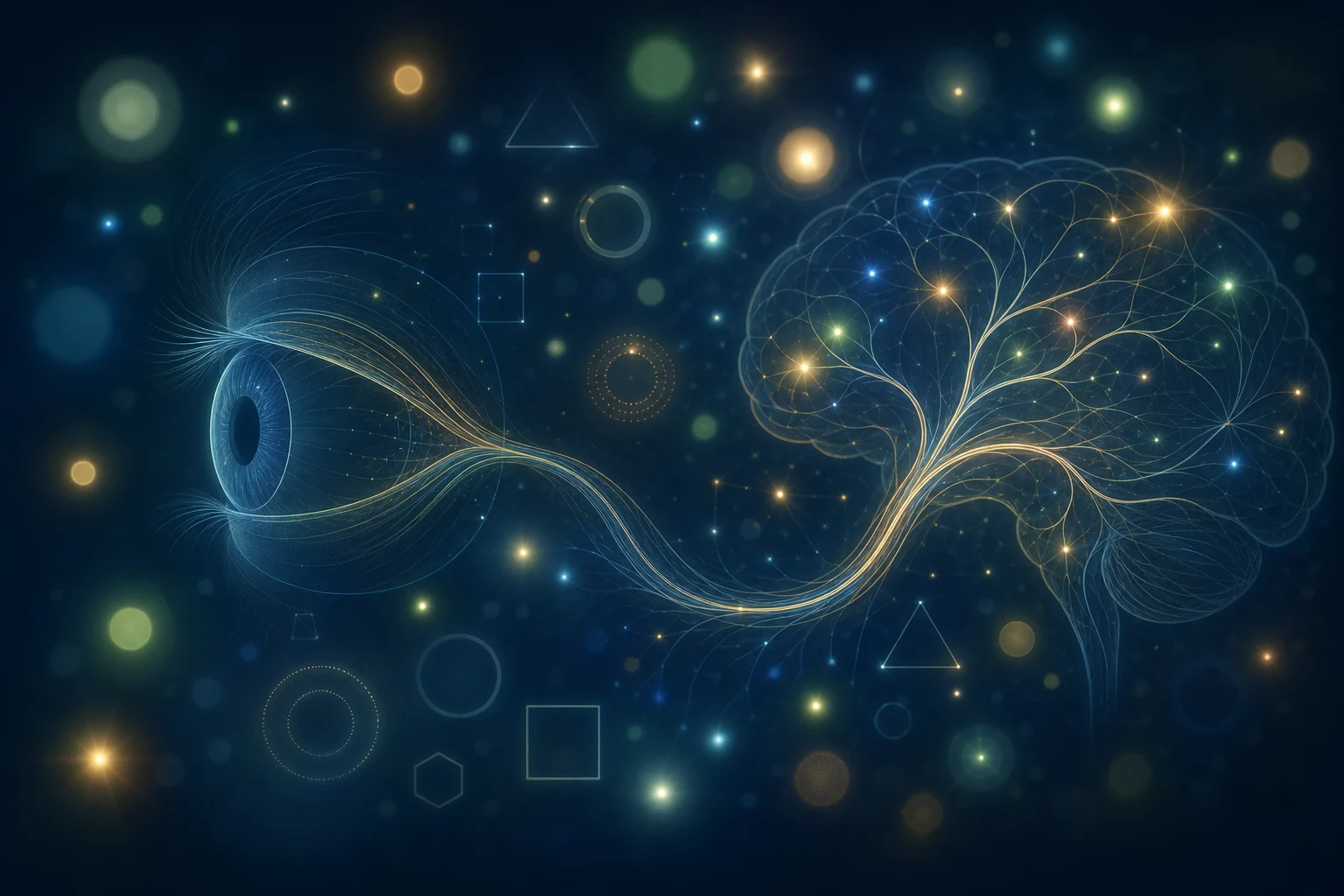
Phosphenes are flashes, dots, stars, shapes, or colors that appear without a matching object in front of you. They can happen when your eyes are closed because the retina and visual pathways still have electrical activity. Pressure on the eyelids, rubbing the eyes, coughing, bright light before closing your eyes, migraine tendencies, fatigue, or certain eye conditions can make these effects more noticeable.
Afterimages are slightly different. If you stare at a bright window, phone screen, or high-contrast object, then close your eyes, you may see a lingering shape or color reversal. That does not mean you are imagining unusually well. It often reflects how the visual system adapts after stimulation.
For many people, these images are brief and harmless. They may look like:
- tiny stars or pixels,
- cloudy patches of color,
- kaleidoscope-like motion,
- flashing lights,
- outlines of something recently seen.
Still, be careful with eye pressure. Rubbing your eyes hard can irritate them, and new flashes with floaters, blurry vision, double vision, eye pain, a head injury, or known eye disease should be discussed with an eye care professional. Closed-eye visuals can be common, but your eyes are worth taking seriously when the pattern changes.
Why Random Images May Appear Before Sleep
When you close your eyes to sleep and see random images, the timing may be the most important clue. The transition from wakefulness into sleep can bring brief visual impressions that feel more vivid than ordinary imagination. These may include patterns, faces, rooms, animals, landscapes, or sudden scenes. They can appear and vanish quickly, sometimes with a mild jolt back to wakefulness.
Sleep-related images can feel disturbing because you are tired, less in control of attention, and closer to dreamlike processing. A scary face or unwanted scene during this state does not prove anything about your character, beliefs, or mental health. It may simply be your brain moving between waking perception and dreaming.
Practical supports are simple but often useful:
- Reduce bright screens and intense visual content before bed.
- Keep a consistent sleep window when possible.
- Use a dim, quiet wind-down routine.
- Write down recurring worries earlier in the evening.
- If an image appears, open your eyes, orient to the room, breathe slowly, and let the moment pass.
If these experiences are frequent, terrifying, linked with sleep paralysis, or causing insomnia, consider speaking with a healthcare or sleep professional. The point is not to panic; it is to get support when sleep is being disrupted.
Closed-Eye Hallucinations, Schizophrenia, ADHD, and Other Search Concerns
Search results often mix normal closed-eye effects with more serious topics such as schizophrenia, ADHD, medication effects, neurological conditions, psychedelics, and psychosis. That can make a common visual experience feel alarming. A calmer way to think about it is to separate closed-eye visuals from broader patterns.
Schizophrenia and psychosis are not defined by one moment of seeing colors when your eyes are shut. Clinicians look at a fuller picture, which can include persistent hallucinations, delusional beliefs, disorganized thinking, major changes in functioning, and distress. Hallucinations related to psychosis may happen while fully awake and may involve hearing, seeing, feeling, or sensing things that others do not. If you are worried about that kind of pattern, professional support is the right path.
ADHD is also not explained by closed-eye visuals alone. Some people with ADHD may notice more racing thoughts, vivid mental activity, sleep difficulty, or sensory sensitivity, but seeing images with eyes closed is not a standalone sign of ADHD. It is better understood in context: sleep, stress, medication, substance use, eye health, mental health, and personal imagery style can all influence what you notice.
Psychedelic use, some medications, withdrawal states, fever, migraine, seizures, head trauma, and vision loss can also affect visual experience. If the images are new, intense, hard to distinguish from reality, or paired with confusion, weakness, severe headache, seizures, substance changes, or vision symptoms, do not try to solve it with internet searching. Seek appropriate care.
Are Closed-Eye Images Spiritual?
Some people search for the spiritual meaning of seeing images when eyes are closed because the experience feels symbolic, luminous, or emotionally charged. It is understandable to look for meaning, especially if the images arrive during meditation, prayer, grief, stress, or major life transitions.
There is room to hold personal meaning gently without turning every image into a fixed sign. A balanced approach is to ask:
- Did the image arise during meditation, prayer, sleepiness, stress, or after looking at bright light?
- Was it brief and easy to let go, or did it feel intrusive and hard to manage?
- Did it help you reflect, or did it increase fear?
- Is there a practical body-based explanation, such as fatigue, light exposure, eye pressure, migraine, or sleep transition?
Spiritual interpretation can be personal, but it should not replace eye care, sleep support, or mental health care when the experience is distressing or paired with other changes. You can respect your inner life while also staying grounded.

How Closed-Eye Visuals Relate to the Mind's Eye
Closed-eye visuals are not exactly the same as voluntary mental imagery. A phosphene may appear on its own. An afterimage may copy recent light exposure. A hypnagogic image may drift in as sleep approaches. Mental imagery, by contrast, usually means intentionally forming or recalling an image in the mind.
This distinction matters for people exploring aphantasia, hyperphantasia, or the broader visual imagery spectrum. Someone with low voluntary imagery may still see phosphenes or afterimages. Someone with vivid imagery may notice rich scenes when relaxing with closed eyes. Neither experience by itself places you neatly on the spectrum.
If your question is "Can people actually see images when they close their eyes?" the answer is yes, but the word "see" can mean different things. Some people report a picture-like inner image. Others know what they are thinking about without a visual picture. Others see involuntary colors and patterns but cannot summon a clear apple, face, or beach on command. To explore that difference more carefully, a mind's eye exploration guide can help you compare voluntary imagery with closed-eye visual events.
How to Stop Closed-Eye Hallucinations From Taking Over Your Attention
You may not be able to stop every closed-eye image, but you can often reduce how much attention and fear they receive. Start by naming the likely category: light pattern, afterimage, sleep-transition image, intrusive mental image, or something that needs professional input. Naming it can lower the mystery.
Then try a short reset:
- Open your eyes and identify three ordinary objects in the room.
- Relax the jaw, shoulders, and eyelids.
- Avoid pressing on the eyes.
- Shift to a neutral sensory anchor, such as the feeling of the blanket or the sound of a fan.
- If you are trying to sleep, choose a boring, repeatable focus rather than checking whether the image is gone.
For disturbing images, it may help to write one sentence: "I noticed an image; I do not need to analyze it right now." If the same image repeats, keep a simple log of timing, sleep, stress, substances, medication changes, migraines, screen use, and emotional triggers. That record can make a conversation with a professional more useful if you decide to have one.
When to Get Help and What to Explore Next
Most closed-eye visuals are brief, ordinary, and easier to handle once you understand the possible causes. The reasons to seek help are less about one image and more about pattern, intensity, and impact. Consider professional guidance if visuals are new and persistent, happen with eyes open, follow a head injury, come with eye pain or vision changes, include confusion or seizures, cause major anxiety or insomnia, or appear alongside strong changes in mood, thinking, or daily functioning.
For the self-reflection side, notice whether you can intentionally create images, how vivid they are, and whether closed-eye effects are different from imagination. That distinction can make the topic less frightening and more useful. AphantasiaTest.com frames this as insight, not a clinical verdict: you can use an imagery spectrum self-check to reflect on your mind's eye while keeping health concerns in the hands of qualified professionals.
FAQ
Is it normal to see images when you close your eyes?
Yes, it can be normal to see colors, patterns, sparkles, afterimages, or brief dreamlike scenes when your eyes are closed. The meaning depends on timing and context. Brief closed-eye visuals are common; new, frequent, distressing, or symptom-linked visuals deserve more attention.
Is it normal to see afterimages when you close your eyes?
Yes. Afterimages can happen after looking at bright light, screens, windows, or high-contrast shapes. They usually fade. If you have sudden flashes, new floaters, eye pain, blurry vision, double vision, or a recent head injury, contact an eye care professional.
Why do I see disturbing images when I try to sleep?
Disturbing images near sleep may be related to the transition between wakefulness and dreaming, especially when you are stressed, sleep deprived, or overstimulated. Reduce intense screen content before bed, use a calm routine, and seek support if the images are frequent, terrifying, or causing insomnia.
What do schizophrenic visual hallucinations look like?
Visual hallucinations in psychosis can vary widely and may include people, objects, scenes, lights, or other perceptions that seem real. Schizophrenia is not determined by one closed-eye image. If you are having persistent hallucinations, strong unusual beliefs, confusion, or major changes in daily functioning, speak with a qualified professional.
Can people with aphantasia still see closed-eye visuals?
Yes. Aphantasia usually refers to difficulty forming voluntary mental images. Closed-eye phosphenes, afterimages, or sleep-transition visuals can still occur because they are not the same as intentionally creating a picture in the mind.
How do I know whether closed-eye images are imagination or hallucination?
Ask whether you are choosing the image, whether it appears only during relaxation or sleepiness, whether it feels external and real, and whether it disrupts daily life. The boundary can be blurry, so focus less on the word and more on distress, frequency, and related symptoms.
How can I make closed-eye visuals less scary?
Open your eyes, orient to the room, avoid eye pressure, breathe slowly, and label the experience as a passing visual event. If it happens around bedtime, shift to a steady sensory anchor. If fear keeps building or sleep suffers, consider professional support.