Apple Imagination Scale: What the Red Apple Test Says About Your Mind's Eye
If someone asks you to imagine a red apple, what happens in your mind? Some people see a bright, almost photographic apple. Some sense a dim outline. Others know what an apple is, but see no picture at all. The apple imagination scale is a simple way to talk about those differences without turning them into a problem. It is not a clinical tool, but it can give you useful language for your own mind's eye. If the exercise makes you curious about a broader visual imagery pattern, AphantasiaTest.com offers a gentle visual imagery self-reflection tool inspired by VVIQ-style questions.
What Is the Apple Imagination Scale?
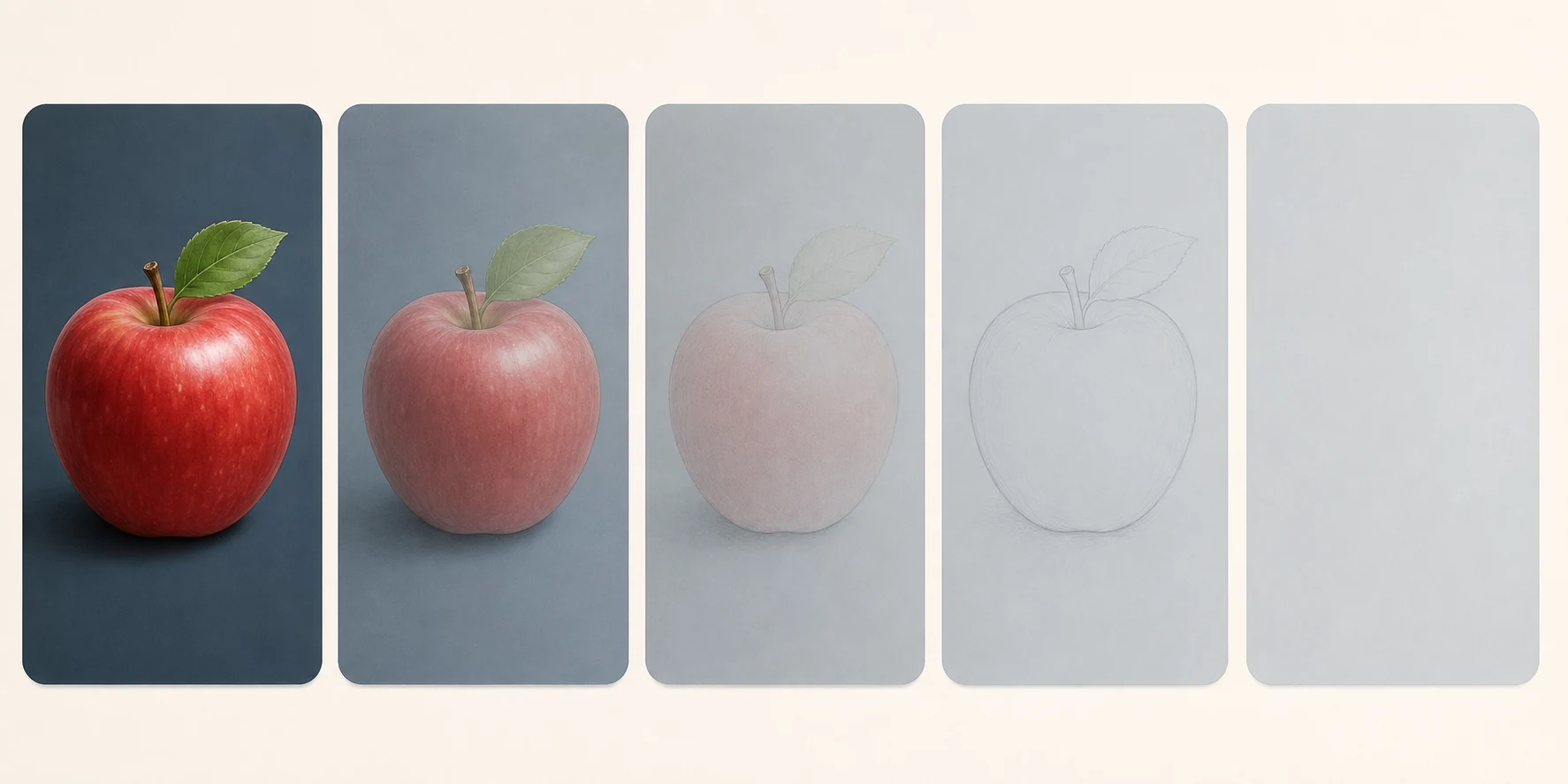
The apple imagination scale is a casual visualization exercise. You picture, or try to picture, a red apple in your mind and then place your experience somewhere along a vividness range. In many viral versions, one end of the scale means the apple is clear, colorful, and stable. The other end means there is no visual image, even though you can still understand the idea of an apple.
That distinction matters. A person who cannot see a mental apple may still know that apples can be red, round, shiny, bruised, tart, sweet, sliced, or sitting in a bowl. They may remember facts, make decisions, create art, or solve spatial problems through words, concepts, feelings, memory, bodily sense, or external reference. The apple exercise is about voluntary visual imagery, not total imagination.
The phrase "apple imagination scale" is also easy to confuse with unrelated searches about Apple products or retail jobs. In this context, apple simply means the fruit used as a familiar prompt. It works because most people know what an apple looks like, so the exercise can focus less on knowledge and more on the vividness of the image that appears, or does not appear.
Apple Imagination Levels: A Practical 1-5 Guide
Different posts label the levels in different ways, but a practical five-point version looks like this:
- Clear and vivid: You can picture a red apple with color, shape, shine, and maybe texture. It may feel almost like seeing.
- Mostly clear: You get a recognizable apple, though it may be less stable or less detailed than real sight.
- Moderate or vague: You sense an apple image, but details blur, fade, or require effort.
- Bare outline or flash: You may get a quick impression, shadow, position, or shape, but not a steady picture.
- No voluntary image: You know you are thinking about an apple, but there is no visual apple in the mind's eye.
These levels are conversation starters, not fixed categories. Your answer might change with fatigue, object familiarity, or whether you imagine a specific apple rather than a generic one. Some people see color but not texture. Some can rotate the apple but cannot hold it still. Some get a quick flash and then nothing.
It is also possible for imagery to differ by sense. A person might have weak visual imagery but a strong inner voice, music memory, spatial sense, or emotional memory. Others may have vivid images but weak imagined smell or sound. The red apple imagination scale opens the door, but it does not map the whole house.
How the Red Apple Exercise Connects to Aphantasia
Aphantasia describes the experience of little or no voluntary visual imagery. On the apple scale, people who consistently land near the blank end may relate to aphantasia, especially if they also struggle to picture familiar faces, places, or scenes on demand. But one quick apple prompt cannot decide that by itself.
Research and educational tools usually approach imagery with more structured questions. The Vividness of Visual Imagery Questionnaire, often shortened to VVIQ, asks people to imagine several scenes and rate the vividness of each one. A VVIQ-style process gives a broader sample than one fruit prompt because it covers different situations: familiar people, places, colors, movement, and scene detail.
That is why the apple scale is best treated as an entry point. It can help you notice a pattern, but a fuller reflection asks whether the same pattern appears across many mental images. If you want a more structured path after the apple exercise, a mind's eye exploration guide can help you compare multiple imagery prompts while keeping the result educational rather than medical.

Try the Imagination Apple Scale Test Carefully
You can try the exercise in under a minute, but it helps to do it gently and consistently.
First, choose a quiet moment. Read the prompt once: imagine a red apple. Close your eyes if that feels comfortable. Notice what appears without forcing an answer. Do you see color? Shape? Highlights? A stem? A background? Does the image stay, flicker, rotate, or vanish?
Second, separate visual image from knowledge. You might think, "I know apples are round," or "I remember buying red apples," while still seeing nothing. That is a real distinction. The question is not whether you know what an apple is; it is whether you voluntarily experience an inner visual image.
Third, repeat with variations. Try a green apple, an apple cut in half, an apple on a wooden table, or an apple spinning slowly. If one version is easier than another, write that down. Specific memory, movement, color, and object familiarity can all affect the experience.
Fourth, compare across days rather than treating one attempt as final. Stress, sleep, attention, and expectations can shape self-report. A calm note such as "I got a faint red curve, then it disappeared" is more useful than trying to force yourself into a label.
What the Apple Test Can and Cannot Tell You
The apple visualization test can describe one moment of voluntary visual imagery. It can reveal that other people experience inner pictures very differently from you. That realization is often the most valuable part.
The test cannot measure intelligence, creativity, memory quality, or overall imagination. A blank apple does not mean a blank mind. People with low visual imagery can still reason visually in non-picture ways, use spatial logic, create with references, write vividly, design systems, or remember information through structure and meaning. People with vivid imagery can also struggle with memory, focus, or creative execution. Imagery vividness is one cognitive trait among many.
The test also cannot replace professional evaluation when someone has broader concerns about cognition, memory changes, trauma, neurological symptoms, or daily functioning. For most curious readers, the right frame is self-understanding: What kind of mental representation do I use? What supports help me think, remember, plan, or create?
Common Misunderstandings About the Apple Scale
One misunderstanding is that the apple scale runs from "bad imagination" to "good imagination." It does not. It describes visual vividness, and visual vividness is not the same as imagination. A novelist may build worlds through language and plot. An engineer may simulate relationships through rules and spatial logic. An artist may draw by observing the marks already on the page rather than copying a picture from the mind.
Another misunderstanding is that aphantasia means high IQ or low IQ. Current public discussion often jumps to intelligence because people search for "spinning apple IQ" or similar phrases. That connection is too strong. Imagery vividness may influence how someone prefers to learn, remember, sketch, navigate, or plan, but it should not be used as a shortcut for ranking intelligence.
A third misunderstanding is that everyone agrees on the same scale direction. Some VVIQ-style scoring systems use lower numbers for vivid imagery and higher numbers for no image; some online graphics reverse the direction. Always read the labels before comparing scores.
A Better Way to Read Your Apple Result
Instead of asking, "What is wrong with my imagination?" try asking more precise questions.
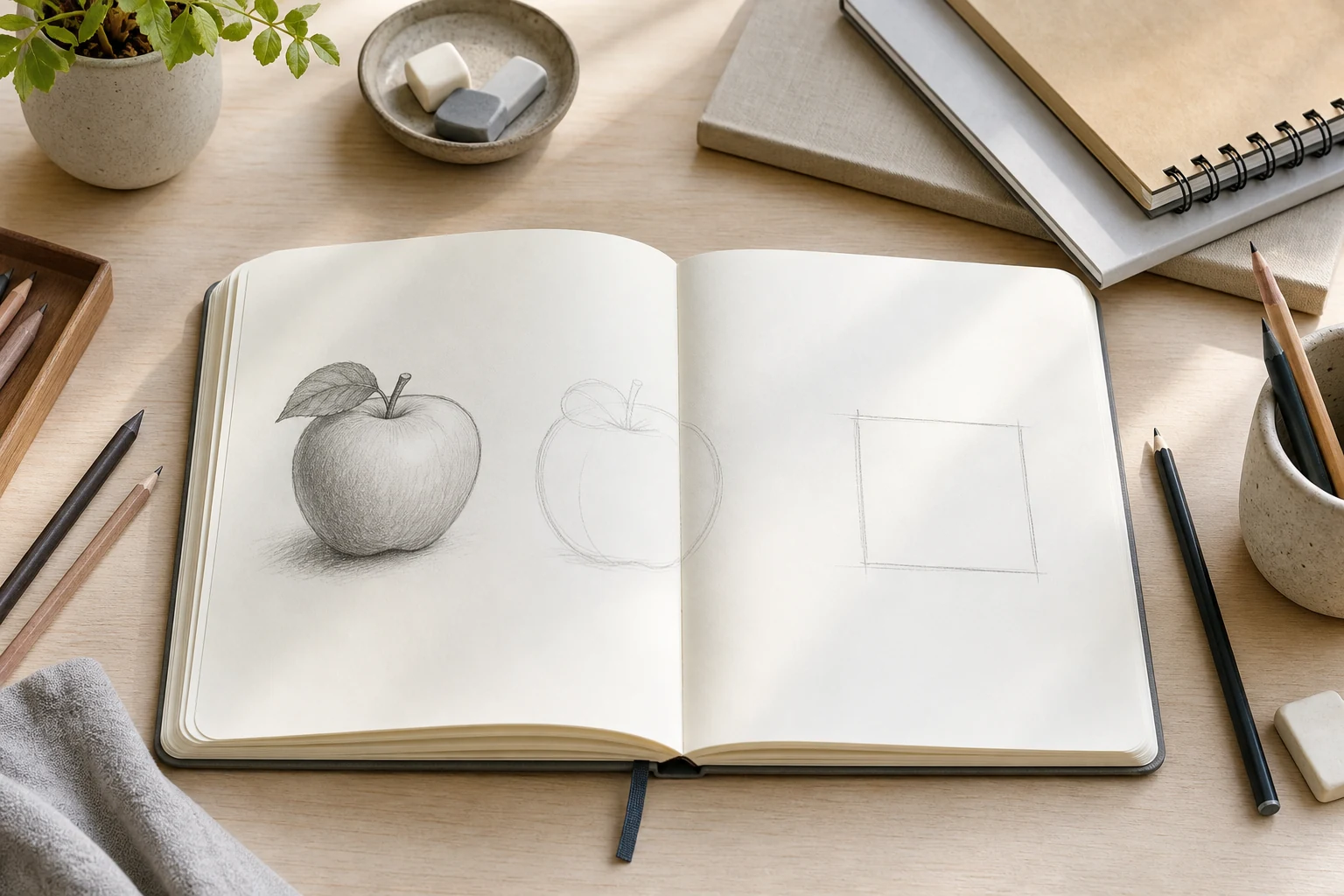
What kind of representation did you use? Was it visual, verbal, spatial, emotional, factual, or bodily? Could you describe the apple without seeing it? Could you draw an apple better while looking at a real one? Did a specific apple appear more easily than a generic one? Did the image change when you imagined touch, smell, taste, or movement?
These questions turn the apple imagination scale from a label into a useful reflection. They also make room for mixed experiences. You might not see a picture, but you may know where the apple is in imagined space. You may not see red, but you may sense roundness. You may not form an image voluntarily, but you may still dream visually or get involuntary flashes.
If you keep notes, avoid dramatic conclusions. Write plain observations: "No picture, but strong factual description." "Faint outline only." "Clear apple for one second, then unstable." Over time, these notes may show a pattern across objects, faces, places, and scenes.
From Apple Imagination Scale to Mind's Eye Self-Understanding
The apple imagination scale is popular because it is simple, surprising, and easy to share. Its deeper value is that it gives people permission to talk about inner experience without assuming everyone thinks the same way. A person who sees a crisp red apple and a person who sees nothing may both be imagining, just through different mental formats.
For AphantasiaTest.com readers, the next step is not to chase a perfect label. It is to explore your imagery style with curiosity, compare it across prompts, and notice which thinking strategies already work for you. A structured aphantasia self-assessment starting point can support that reflection, especially if the red apple exercise made you wonder about your broader visual imagery spectrum.
FAQ
What level of apple can you imagine?
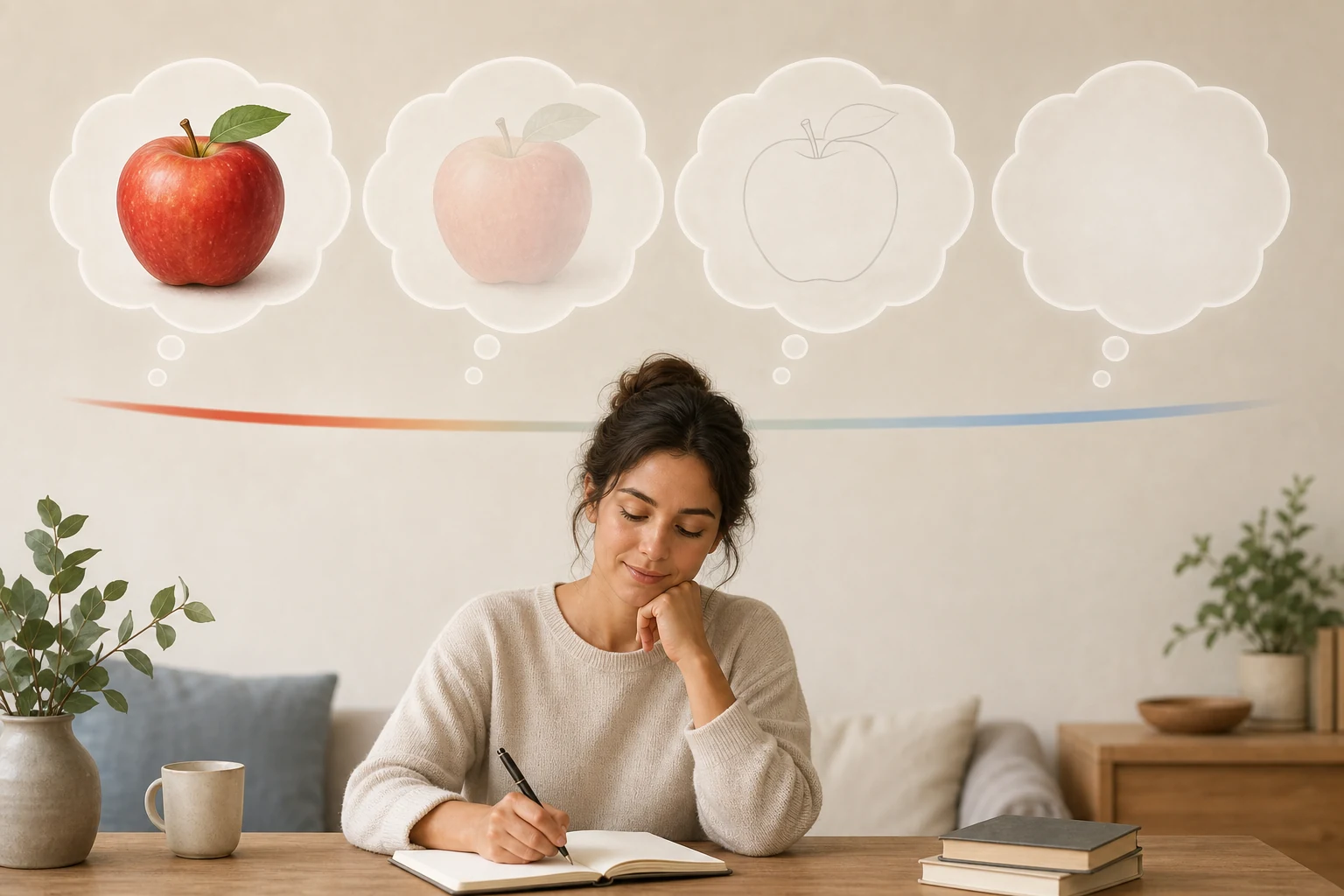
Your level depends on how vivid, stable, and detailed the apple feels in your mind. A clear apple with color and texture sits near the vivid end. A vague shape, quick flash, or blank experience sits closer to the low-imagery end. There is no need to force a perfect number; a short description is often more accurate than a single score.
Is there a scale for aphantasia?
There are casual scales, such as the red apple visualization graphic, and there are more structured self-report tools, such as VVIQ-style questionnaires. The casual apple scale is useful for conversation. A structured questionnaire is better for comparing several imagery situations. Neither should be treated as a medical conclusion by itself.
Is the apple imagination scale the same as VVIQ?
No. The apple scale usually uses one familiar prompt: imagine an apple. VVIQ-style questionnaires ask about multiple scenes and details, which gives a broader view of visual imagery vividness. The apple prompt can be a doorway into the topic, while VVIQ-style reflection is more systematic.
Does aphantasia mean high IQ?
No reliable rule says aphantasia means high IQ. People with aphantasia can be intelligent, creative, practical, artistic, analytical, or any mix of traits, just like people with vivid imagery. Visual imagery is one part of cognition, not a ranking system for ability.
How rare is full aphantasia?
Research estimates vary by definition and method. Strict definitions of very low or absent visual imagery often place full aphantasia around about 1% of people, while broader low-imagery categories are sometimes estimated at a few percent. The exact number depends on the questionnaire, cutoff, and sample.
Why do some people see a red apple and others see nothing?
Human minds use different formats for thought. Some people rely heavily on visual simulation. Others rely more on language, facts, spatial structure, emotion, or bodily sense. A blank apple image does not mean the person lacks understanding; it means their voluntary visual imagery may be weak or absent.
Can the apple test tell me if I have aphantasia?
It can suggest that your experience is worth exploring, especially if you repeatedly see no voluntary image across many prompts. But one apple exercise is too narrow to settle the question. Broader self-reflection, structured questionnaires, and professional guidance when relevant give a more careful picture.