Apple Aphantasia: What the Apple Test Says About Your Mind's Eye
If someone asks you to picture an apple, what happens inside your mind? Some people see a glossy red apple with a stem, light, shadow, and color. Some sense a vague shape for half a second. Some know exactly what an apple is but see no picture at all. That simple gap is why "apple aphantasia" has become such a popular way to talk about the mind's eye. It is not a full assessment by itself, but it can be a useful first clue that visual imagination varies more than many people realize. If the prompt leaves you curious, a gentle visual imagery self-check can help you reflect on the experience in a more structured way.
What Is the Apple Aphantasia Prompt?
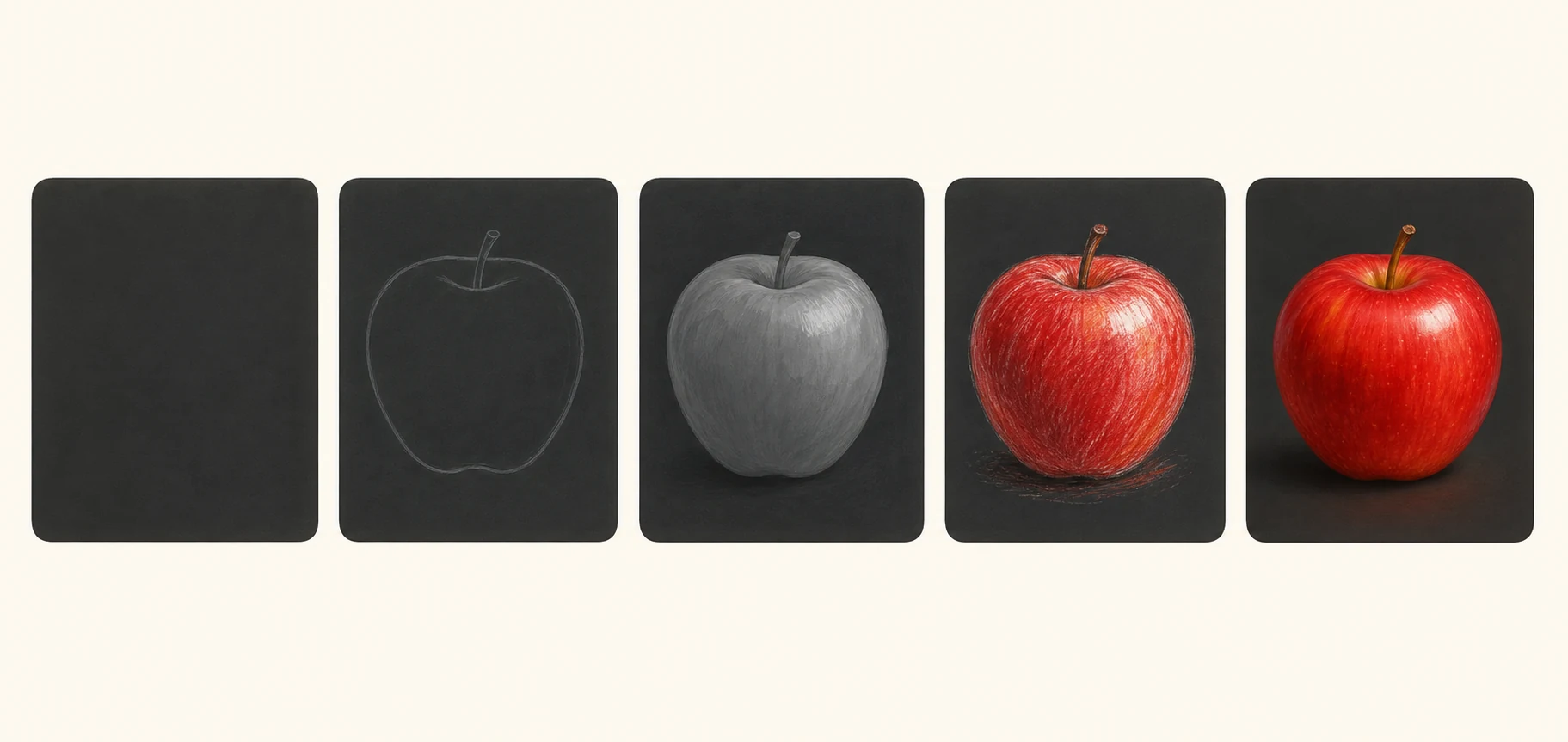
The apple prompt is a casual visual imagery exercise: close your eyes or soften your focus, then try to imagine a red apple. The useful question is not whether you can think about an apple. Almost everyone can understand the concept, name its parts, remember that apples can be red or green, and describe how one feels in the hand. The question is whether a voluntary visual image appears in your mind's eye.
That distinction matters. A person with low or absent visual imagery may still know the apple perfectly well. They may think in words, facts, spatial relationships, emotions, categories, or physical actions instead of pictures. Someone else may produce a vivid apple almost as if looking at a photograph. Many people are somewhere in the middle, with a dim, unstable, or partial image.
The phrase "aphantasia apple test" usually refers to this quick comparison between a blank or nonvisual experience and a visible mental picture. It is simple, memorable, and easy to share, which is why it often travels as a meme or chart. Its weakness is the same as its strength: one apple is only one example. A more careful reflection asks about many scenes, consistency over time, and how vividness changes with eyes open, eyes closed, memory, dreams, and imagination.
Why an Apple Works So Well
The apple works because it is familiar but visually rich. A red apple can have color, shine, a stem, a leaf, small speckles, a round shape, a bite mark, or a sense of weight. When someone says "visualize an apple," your mind has many possible features to work with. That makes differences in imagery easier to notice.
For a vivid visualizer, the apple may arrive quickly. They might rotate it, zoom in on the skin, change the color, or place it on a table. For someone closer to aphantasia, the same instruction may produce knowledge without display. They may think, "apple: round, red, fruit," but there is no inner screen showing one.
This is why searches such as "what apple do you see in your head" and "picture an apple" feel surprisingly personal. They reveal that everyday phrases like "see it in your mind" are literal for some people, metaphorical for others, and somewhere in between for many.
How to Try the Apple Visualization Test Gently
You can try the apple visualization test in a low-pressure way. Do it when you are relaxed, not when you are trying to force a result.
- Sit quietly and choose one target: a red apple.
- Close your eyes if that helps, but do not strain.
- Notice whether an image appears, not whether you know what an apple is.
- Ask what qualities are present: color, outline, texture, depth, motion, brightness, or stability.
- Try one small change, such as turning the apple or moving it closer.
- Write down what happened in plain language.
Some people find that they can call up a faint outline but not color. Others report a quick flash that disappears. Some get a spatial sense, like knowing where the apple would be, without seeing it. Others can create a detailed apple and keep it stable. None of these answers makes you better or worse at thinking. They are clues about your imagery style.
If you searched for "apple rotator," "spinning apple," or "apple spinning in head," you may be testing motion imagery rather than simple object imagery. Rotation is an extra demand. Someone might imagine a still apple but struggle to spin it, while another person may feel the movement without seeing a clear picture. Treat motion as a second layer, not as proof that the first answer was wrong.
What Different Apple Answers Can Mean

If you see nothing, apple aphantasia may feel like the closest phrase for your experience. You may still understand apples, recognize them, draw them from knowledge, and talk about them easily. The missing piece is the voluntary picture.
If you see a vague or dim apple, you may be describing low vividness rather than complete absence. Some people use words like foggy, transparent, unstable, or far away. The image might be present but weak. This can still be meaningfully different from the vivid mental imagery other people describe.
If you see a bright red apple with detail, you are probably using visual imagery with relative ease. You might also notice individual variation: perhaps faces are hard but objects are easy, or memories are vivid but invented scenes are not. The apple scale is a doorway into these differences, not a final map.
If you can manipulate the apple, that suggests another skill: visual control. Vividness and control are related but not identical. One person may see a clear apple but struggle to rotate it. Another may not see much, yet still reason spatially about how an apple would turn. That is why the "apple on head" or "spinning apple" versions of the prompt can be confusing. They mix object imagery, body position, humor, and spatial transformation.
What the Apple Test Cannot Tell You
The apple test cannot tell you your IQ, creativity, personality, or future. It also cannot determine whether you are autistic, ADHD, artistic, logical, emotional, or uncreative. People with aphantasia can be writers, designers, engineers, teachers, artists, parents, students, and excellent problem-solvers. People with vivid imagery can be analytical and precise. The mind does not sort neatly into one talent box.
The test also cannot separate a temporary state from a long-term pattern. Fatigue, stress, unfamiliar instructions, eye position, expectations, and wording can affect what you report. Some people are unsure whether they are "seeing" or "thinking." That confusion is common because mental imagery is private. There is no shared screen to compare.
A better approach is to notice patterns over several prompts. Try a familiar face, a room you know well, a sunrise, a map route, or a simple shape. Compare objects, places, motion, memory, and imagined scenes. If your answer is consistently "I know, but I do not see," that is different from having one difficult apple moment.
Apple Aphantasia and the VVIQ Approach
Researchers and many educational tools often use broader self-report questionnaires to explore visual imagery vividness. The VVIQ-style approach is useful because it asks about multiple scenarios instead of only one object. Rather than asking "Can you picture an apple?" once, it asks you to consider different people, places, and scenes, then rate the clarity of your mental image.
That broader structure matters for fairness. A single apple may be too familiar, too boring, too culturally loaded, or too easy to answer conceptually. Multiple prompts help you see whether your experience is stable. They can also reveal that your imagery is selective. You might picture places more easily than objects, or color more easily than faces.
For a self-reflection platform such as the AphantasiaTest mind's eye questionnaire, the goal is not to turn a private experience into a rigid label. It is to help you describe your cognitive style more clearly. That description can be useful when you think about learning, memory, reading, creativity, planning, and communication.
Practical Ways to Reflect After the Apple Test
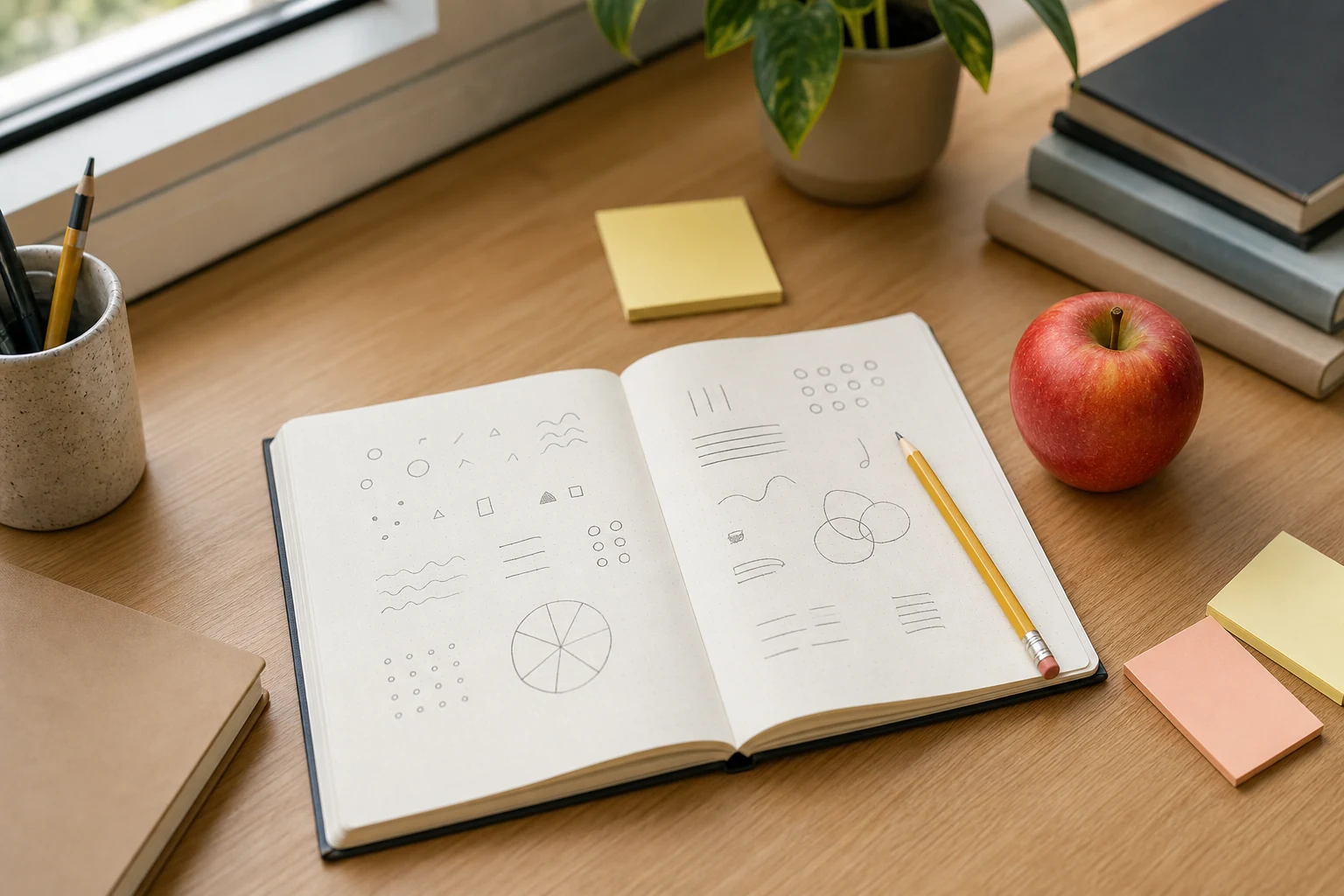
After the apple prompt, write a short note rather than chasing the perfect category. Use sentences like these:
- "I knew the apple but did not see one."
- "I saw a faint outline for a moment."
- "I saw red but not detail."
- "I could see it clearly but could not rotate it."
- "I saw it vividly and could change it."
Then ask how this style shows up in daily life. Do you prefer diagrams you can see with your eyes? Do lists work better than mental pictures? Do you remember facts, feelings, or locations more strongly than visual scenes? Do you enjoy fiction without seeing characters? Do you plan routes through language, landmarks, body memory, or maps?
These questions are more useful than arguing over whether a social media chart has the perfect scale. The apple chart can start the conversation. Your everyday strategies reveal the richer story.
Use Apple Aphantasia as a Starting Point
Apple aphantasia is best understood as a friendly entry point into the visual imagery spectrum. If you cannot visualize an apple, you are not alone, and you are not failing the exercise. You may simply rely less on voluntary pictures than other people do. If you see a vivid apple, the prompt can still be useful because it helps you appreciate how different another person's inner experience may be.
The healthiest next step is curiosity. Compare a few prompts, notice your own language, and avoid turning one moment into a fixed identity too quickly. If the topic matters to your learning, work, relationships, or self-understanding, an optional self-reflection starting point can give you a calmer framework than a fast meme scale. Use the result as insight, not as a verdict.
FAQ
What is the aphantasia apple thing?
The aphantasia apple thing is a simple prompt: try to imagine a red apple and notice whether you see a mental picture. Some people see a detailed apple, some see a faint or partial image, and some see nothing while still knowing what an apple is. It is a quick way to notice differences in visual imagery.
Is the apple test for aphantasia reliable?
It is useful as a first reflection, but it is not a complete assessment. One object cannot capture every part of visual imagery. A broader approach asks about multiple scenes, vividness, stability, and consistency over time.
What if I can imagine an apple but not make it spin?
That may mean your object imagery and motion control differ. Seeing a still apple, rotating it, changing its color, and holding it steady are related but separate demands. Difficulty with a spinning apple does not automatically mean absent imagery.
Does aphantasia mean high IQ?
No. Aphantasia is about voluntary mental imagery, not intelligence. People across the imagery spectrum can be highly capable, creative, analytical, practical, or imaginative in different ways.
Can people with aphantasia draw an apple?
Yes. Drawing can rely on knowledge, observation, muscle memory, practice, and external references. Some people who do not see mental pictures can still draw well, especially when they use real objects, sketches, diagrams, or step-by-step construction.
Is aphantasia a form of autism?
Aphantasia is not the same thing as autism. Some people may identify with both, and researchers continue to study relationships among different cognitive traits, but one does not automatically imply the other. It is better to treat visual imagery as one part of a much wider cognitive profile.
Why do I know what an apple looks like but see nothing?
Knowledge and mental imagery are not identical. You can store facts about shape, color, category, taste, and use without producing a voluntary picture. For many people with aphantasia-like experiences, the concept is clear even when the inner image is absent.