Aphantasia Test Accuracy: Self-Assessment & Diagnosis
Have you ever wondered if your "mind's eye" works differently from others? Perhaps you've heard the term aphantasia and thought it might describe you. In your search for answers, you've likely come across various online quizzes. This leads to a crucial question: How accurate are online aphantasia tests?
Many people share this concern. They want to know if a quick online tool can provide reliable insights into their cognitive world. Let’s unpack this question to get a clearer answer. While online self-assessments are powerful starting points, it's important to understand their purpose and limitations.
This article will explore the accuracy of these tools. We will cover the science they are built on, how they differ from a formal diagnosis, and how you can use them to empower your journey of self-discovery. Understanding these differences is the first step toward exploring your unique mind, and a well-designed aphantasia test is the perfect place to begin.
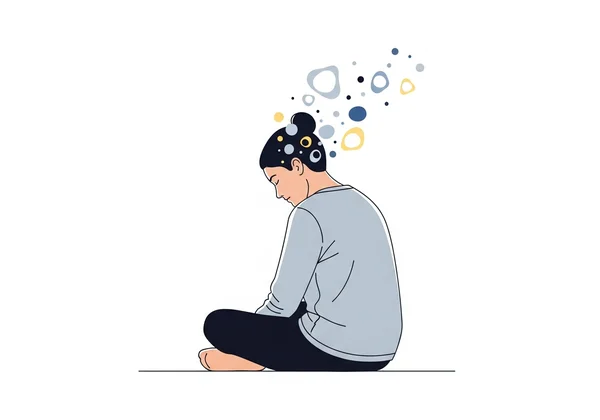
Understanding Online Aphantasia Tests: Are They Accurate?
When you take an online aphantasia test, you're engaging in a form of self-assessment. The accuracy of these tests depends heavily on their scientific foundation and their design. A reliable test isn't just a random set of questions; it’s a carefully structured tool designed to measure a specific cognitive trait—in this case, the vividness of your visual imagery.
These tools are most accurate when seen as a mirror for self-reflection. They provide a score or a category that helps you place your personal experience on a broader spectrum. They can validate feelings you've had for years or give you a new language to describe your inner world.
The Science Behind Self-Assessments: VVIQ Principles
The gold standard in aphantasia research is the Vividness of Visual Imagery Questionnaire (VVIQ), developed in 1973. This questionnaire asks participants to imagine various scenes—like a friend's face or a rising sun—and rate the clarity and vividness of the image in their mind. It provides a structured way to quantify something deeply personal.
Most high-quality online tools, including our scientifically-inspired test, are based on the principles of the VVIQ. They use a similar method of asking you to rate your own internal experiences. This scientific inspiration gives them a solid foundation and makes them a reliable indicator. By grounding the questions in established psychological methods, a visual imagery test can provide meaningful results that align with decades of research.
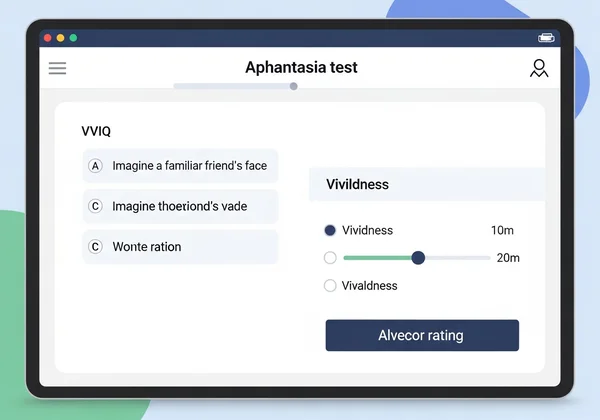
Evaluating the Design & Limitations of Online Tools
While based on science, it’s crucial to acknowledge the limitations of any online self-assessment. First, the results are subjective. The test relies entirely on your self-reported answers. Your honesty and self-awareness are key to an accurate score.
Second, an online quiz cannot diagnose a condition. It is a screening tool, not a diagnostic instrument. It can tell you that your traits are consistent with aphantasia, but it cannot rule out other factors or provide a comprehensive psychological profile. A trustworthy online test will be transparent about this. It should also prioritize your privacy and never ask for unnecessary personal information.
Self-Assessment vs. Professional Diagnosis: What's the Difference?
Understanding the line between self-discovery and clinical evaluation is essential. Both have value, but they serve very different purposes. An online test is your private first step, while a professional diagnosis is a comprehensive process for those who need deeper clarity.
Let's explore the distinct roles of each to help you navigate your journey.
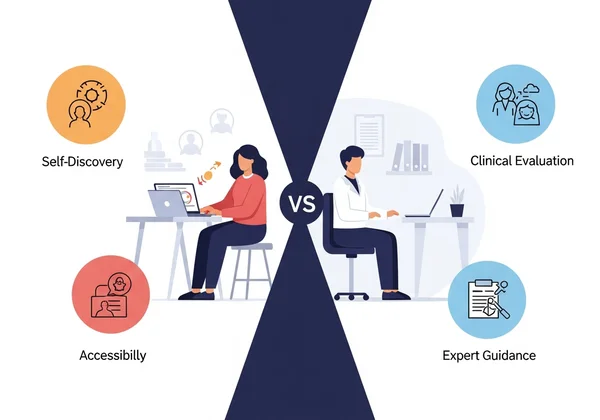
The Role of Self-Tests in Your Initial Exploration
A self-test is your personal gateway to understanding your mind. It’s a low-pressure, accessible, and often free way to explore your curiosity. If you've ever thought, "I don't think I see pictures in my head like other people do," a self-assessment can provide immediate feedback.
Treat this test as personal data collection. Your score frames your experience—like a mirror reflecting how your mind works. It can be incredibly validating to see your lifelong feeling reflected in a result. This initial step can open doors to communities, resources, and a better understanding of your cognitive style. For many, this is all they need to feel more confident and understood. Taking a free aphantasia test is an excellent way to start this exploration safely and privately.
When a Clinical Evaluation Becomes Necessary
A professional evaluation becomes relevant if your cognitive style is causing you significant distress, affecting your daily life, or if you suspect it's linked to another condition. Aphantasia itself is not considered a disorder, but a neuropsychologist or a clinical psychologist can provide a much deeper analysis.
A clinical assessment dives much deeper. Your clinician will:
- Explore your developmental and medical history through detailed interviews.
- Use cognitive tests to evaluate memory and processing skills.
- Rule out other neurological or psychological conditions.
This process isn't typically necessary for simple curiosity about aphantasia. However, if you have concerns that go beyond visual imagery, seeking professional guidance is always the best course of action.
Maximizing Your Aphantasia Test Experience: Next Steps
Once you've taken a test, you'll have a result—a number or a label. But what does that score really mean for you? The true value of a self-assessment lies in how you use it to inform your next steps, whether that means further personal reflection or seeking outside guidance.
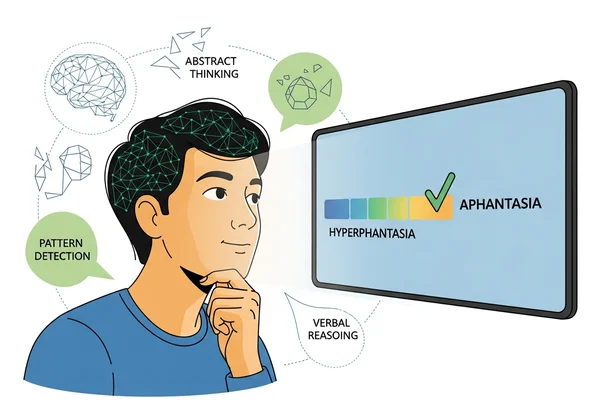
Interpreting Your Aphantasiatest.com Score
The score you get from our online aphantasia test places you on a spectrum of visual imagination. At one end is hyperphantasia (highly vivid, photo-like imagery), and at the other is aphantasia (the absence of voluntary mental images). Most people fall somewhere in between.
Remember, this is not a measure of your intelligence, creativity, or worth. It is simply a description of how your brain processes visual information. A low score doesn't mean you are deficient; it means you have a different way of thinking. Many successful artists, scientists, and leaders have aphantasia. Your score is a key to understanding your unique strengths, such as abstract thinking, verbal reasoning, or fact-based memory.
Making an Informed Decision About Professional Guidance
Your test result can be a powerful tool if you decide to speak with a therapist or psychologist. Instead of saying, "I think I think differently," you can say, "I took a self-assessment based on VVIQ principles, and my score suggests I have low visual imagery."
This gives the professional a clear and specific starting point. It helps frame the conversation and directs the focus of any further evaluation. Your self-assessment empowers you to have a more informed and productive discussion about your cognitive profile. It transforms a vague feeling into a concrete piece of information.
Empowering Your Cognitive Journey: Knowledge Through Assessment
So, are online aphantasia tests accurate? Yes, when used for their intended purpose: as a reliable, science-inspired tool for self-exploration. They provide a valuable starting point for understanding your mind's eye, offering insights that can be both validating and empowering.
They are not, however, a substitute for a clinical diagnosis. It's crucial to appreciate this distinction. Use self-assessments to satisfy your curiosity and gather personal knowledge, but always consult a professional if you have deeper concerns about your well-being.
Your cognitive journey is uniquely yours. Knowledge is the first step, and a trustworthy assessment is the key to unlocking it. Are you ready to explore your mind's eye?
Start your free test now and take the first step toward understanding your inner world.
Frequently Asked Questions About Aphantasia Test Accuracy
How reliable are online aphantasia tests?
High-quality online tests, especially those based on the principles of the scientific VVIQ, are reliable tools for self-assessment. They accurately reflect your own perception of your visual imagery. However, their results are a starting point for reflection, not a formal clinical conclusion.
Can an online test definitively diagnose aphantasia?
No. An online test cannot provide a medical diagnosis. Aphantasia is not currently classified as a medical disorder, and a definitive "diagnosis" can only be made through a comprehensive evaluation by a qualified professional, like a neuropsychologist, who can rule out other conditions.
What's the best way to get a professional diagnosis for aphantasia?
If you feel a professional evaluation is necessary, you should consult with a psychologist or neurologist specializing in cognition. You can share the results of your self-assessment as a starting point for a deeper conversation about your cognitive profile and any concerns you may have.
Is the Aphantasiatest.com tool scientifically backed?
Yes, our test is scientifically inspired. It is carefully designed based on the principles of the well-established Vividness of Visual Imagery Questionnaire (VVIQ), which is a trusted method used in psychological research. This ensures that the questions are relevant and the results provide a meaningful measure of your visual imagination. You can try our free tool to experience it yourself.
Should I be concerned if my visual imagination is low?
No, having low or no visual imagery is not something to be concerned about. Aphantasia is considered a natural variation in human cognition, not a defect or illness. From artists to engineers, countless people with aphantasia thrive by leveraging their strengths—like sharp verbal reasoning or pattern detection.