Aphantasia Horse Test: What It Means When You Cannot Picture a Horse
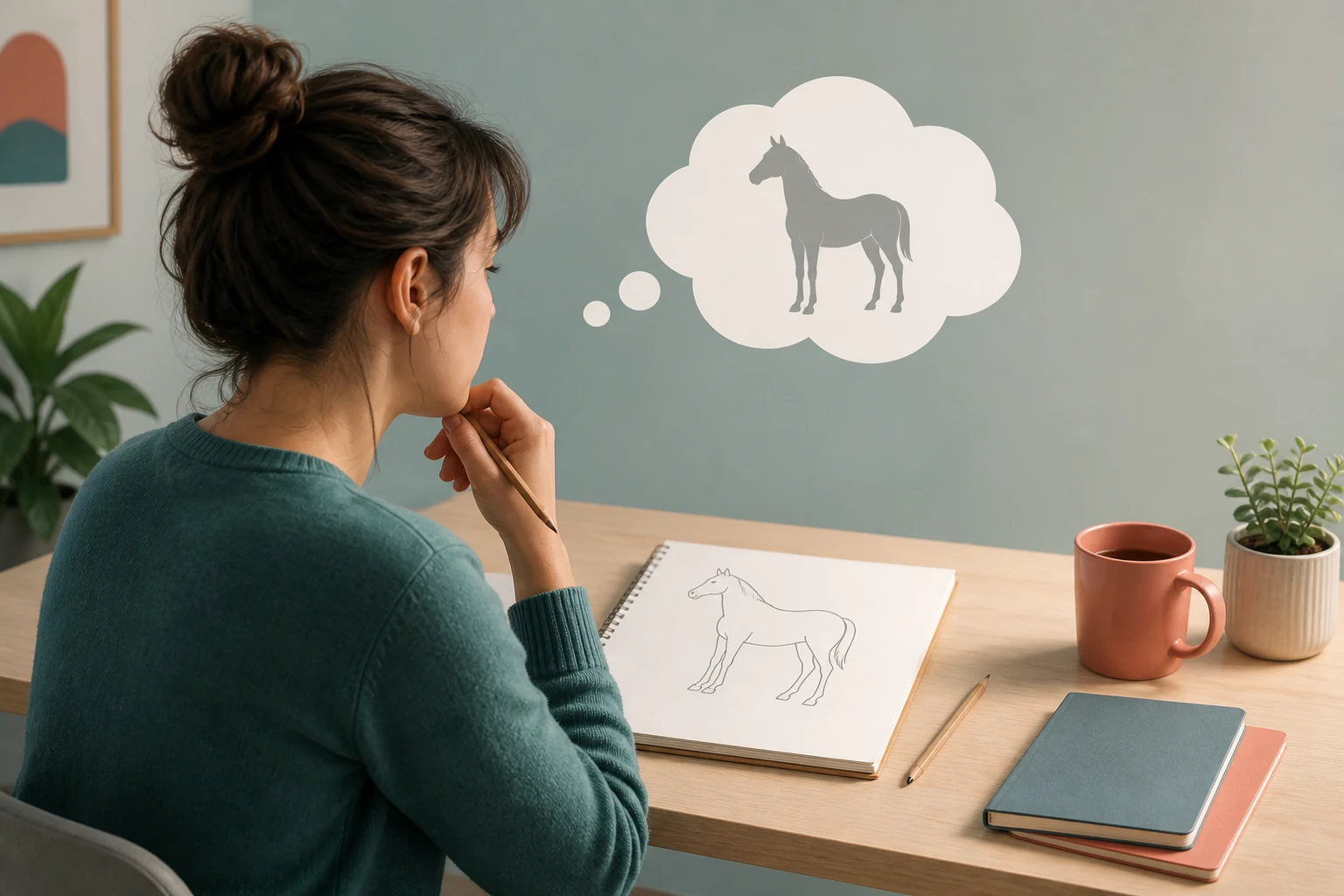
If someone says, "Think of a horse," what happens in your mind? Some people see a clear animal with a coat color, mane, posture, and background. Others sense only a vague outline. Some know the idea of a horse without seeing any picture at all. That simple contrast is why the aphantasia horse prompt has become a useful conversation starter. It is not a formal clinical conclusion, but it can help you notice how your mind handles visual imagery. If the question leaves you curious, a gentle visual imagery self-check can give you a more structured way to reflect on your mind's eye.
Why the Horse Prompt Works
The horse prompt works because it asks for something familiar but not identical for everyone. Most people know what a horse is, even if they do not ride, draw, or live near horses. The concept usually includes a body shape, four legs, a mane, a tail, a face, and movement. That makes it easy to compare the difference between knowing and seeing.
For a person with vivid imagery, "horse" may create a scene quickly: a brown horse in a field, a white horse facing forward, or a running horse with dust behind it. For someone with visual aphantasia, the same prompt may produce facts, words, spatial knowledge, or a sense of meaning without any visual image. They may know a horse has a long face and strong body, but no picture appears in the mind's eye.
That is the key point. The aphantasia horse test is less about horses and more about the route your mind takes from a word to an inner experience. The word can activate visual imagery, language, memory, emotion, movement, or knowledge. Different people use different routes.
What You Might Experience During an Aphantasia Horse Test
There is no single correct response. A helpful way to use the prompt is to slow down and notice the quality of the experience instead of trying to force an image.
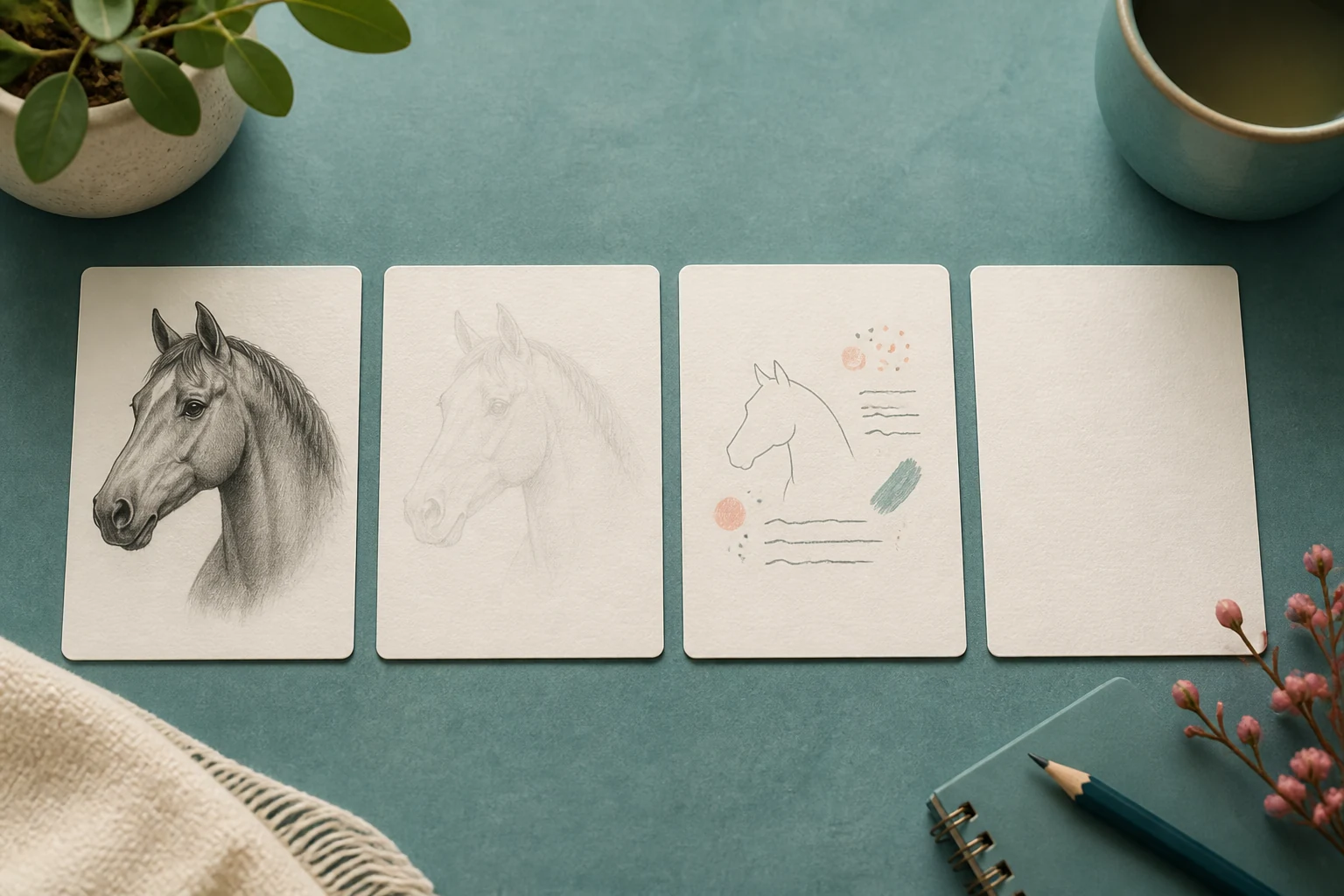
A vivid image
You may see a horse with color, texture, distance, pose, and a setting. The picture might change as you think about it. You may be able to rotate it, zoom in on the face, or imagine the mane moving. This points toward stronger voluntary visual imagery, although the vividness can still vary from day to day.
A dim or unstable image
You may get a faint, partial, or flickering impression. Maybe you sense a horse shape for a moment, but it disappears when you try to inspect it. This does not necessarily mean aphantasia. Many people sit in the middle of the imagery spectrum, where images are present but not movie-like.
No visual image, but clear knowledge
You may know what a horse is without seeing one. You might think, "large animal, four legs, mane, tail," or remember facts from books, films, or real life. Some people describe this as thinking in labels, concepts, or inner speech. That experience is often what people mean when they talk about aphantasia horse imagery.
A non-visual sense
Some people do not see the horse but can imagine movement, touch, sound, or emotional context. Others have little voluntary imagery across several senses. A single horse prompt cannot map every type of aphantasia, but it can reveal which parts of imagination feel available to you.
Horse, Apple, and Other Aphantasia Image Prompts
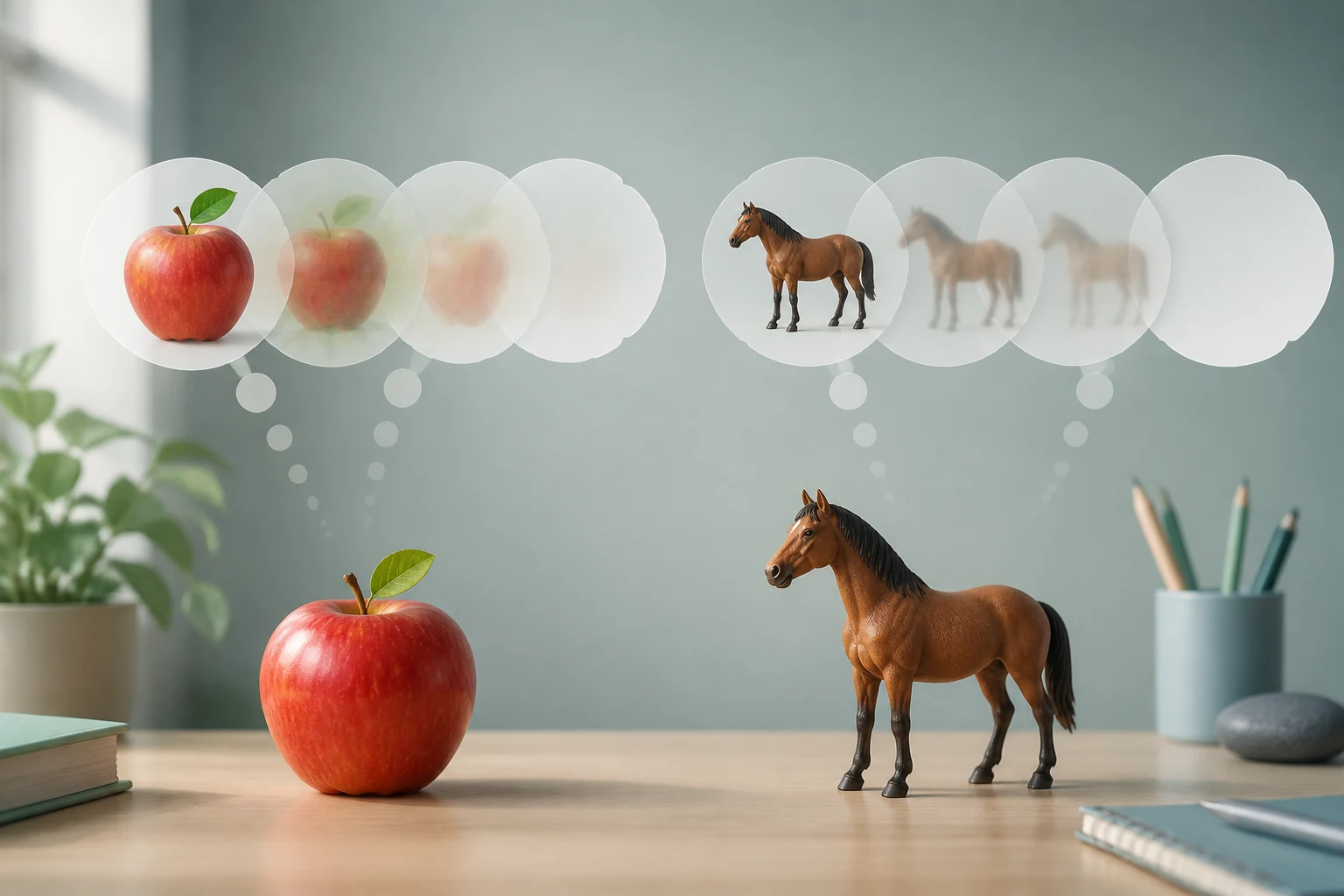
You may also see the apple prompt used online: picture an apple, then ask whether it appears as a clear red fruit, a vague object, a symbol, or nothing visual. The aphantasia apple prompt is popular because apples are simple and easy to imagine for many people. The horse prompt adds a slightly different layer because a horse has posture, a face, movement, and more possible detail.
Neither prompt is better in every situation. The apple is compact and familiar. The horse is richer and can make differences in detail easier to notice. Someone may fail to picture an apple but still sense a horse's movement, or see a vague apple but no horse face. These mixed responses are one reason a broader VVIQ-style aphantasia test can be more useful than one quick question.
Try using the horse prompt as a small observation exercise:
- First, ask whether anything visual appears at all.
- Next, ask how vivid, stable, and detailed it feels.
- Then ask whether you are using words, facts, spatial awareness, memory, or emotion instead.
- Finally, notice whether the answer changes with eyes open, eyes closed, or more time.
The goal is not to pass or fail. The goal is to build vocabulary for your own experience.
Aphantasia Types and the Imagery Spectrum
Searches for aphantasia types often come from people who realize the horse prompt is too simple. They want to know whether aphantasia means no images ever, no voluntary images, weak images, or no imagined sensory experience of any kind.
In everyday educational language, visual aphantasia usually refers to little or no voluntary visual imagery. Some people have lifelong low imagery and only discover it when another person describes mental pictures. Others report a change after a health event or injury and should consider professional guidance, especially if the change is sudden or worrying.
There can also be differences across senses. One person may have no visual image but a strong inner voice. Another may have limited imagined sound, smell, or touch as well. Some people still dream visually, while others report dreams in knowledge, emotion, or story structure. The horse prompt cannot sort all of that out, but it can open the door to more specific questions.
It also helps to remember the opposite end of the spectrum. Hyperphantasia describes unusually vivid mental imagery. Between aphantasia and hyperphantasia are many ordinary variations: dim images, brief flashes, static scenes, strong spatial layouts, or vivid images only for familiar people and places. The aphantasia horse test makes that range easier to discuss because almost everyone understands the word "horse," even when their inner response differs.
How Common Is Aphantasia, and What Does It Mean for Daily Life?
Research estimates vary, but many summaries place aphantasia in the low single digits of the population. That means it is not something everyone experiences, yet it is common enough that many people eventually find others who recognize the same image-free thinking style.
In daily life, a low-imagery mind can still recognize objects, understand stories, plan routes, solve problems, and create. A person who cannot picture a horse may still identify a horse immediately in a photo or field. Recognition and voluntary visualization are not the same task. Memory can also work through facts, sequences, emotional knowledge, spatial relationships, or language rather than mental pictures.
This distinction matters because many people first react with surprise: "Other people actually see things?" or "Have I been missing something?" A calmer interpretation is more useful. Aphantasia is often described as a cognitive variation, not a personal failure. If the discovery brings distress, sudden change, or concern about broader cognitive health, it is reasonable to speak with a qualified professional.
How to Use Your Horse Test Result Gently
If the horse prompt feels blank, try not to over-interpret one moment. Fatigue, pressure, unfamiliar instructions, and uncertainty about what "seeing" means can all affect the answer. Instead, compare several prompts across a few days: a horse, an apple, a familiar face, your front door, a route you know well, and a scene from a book.
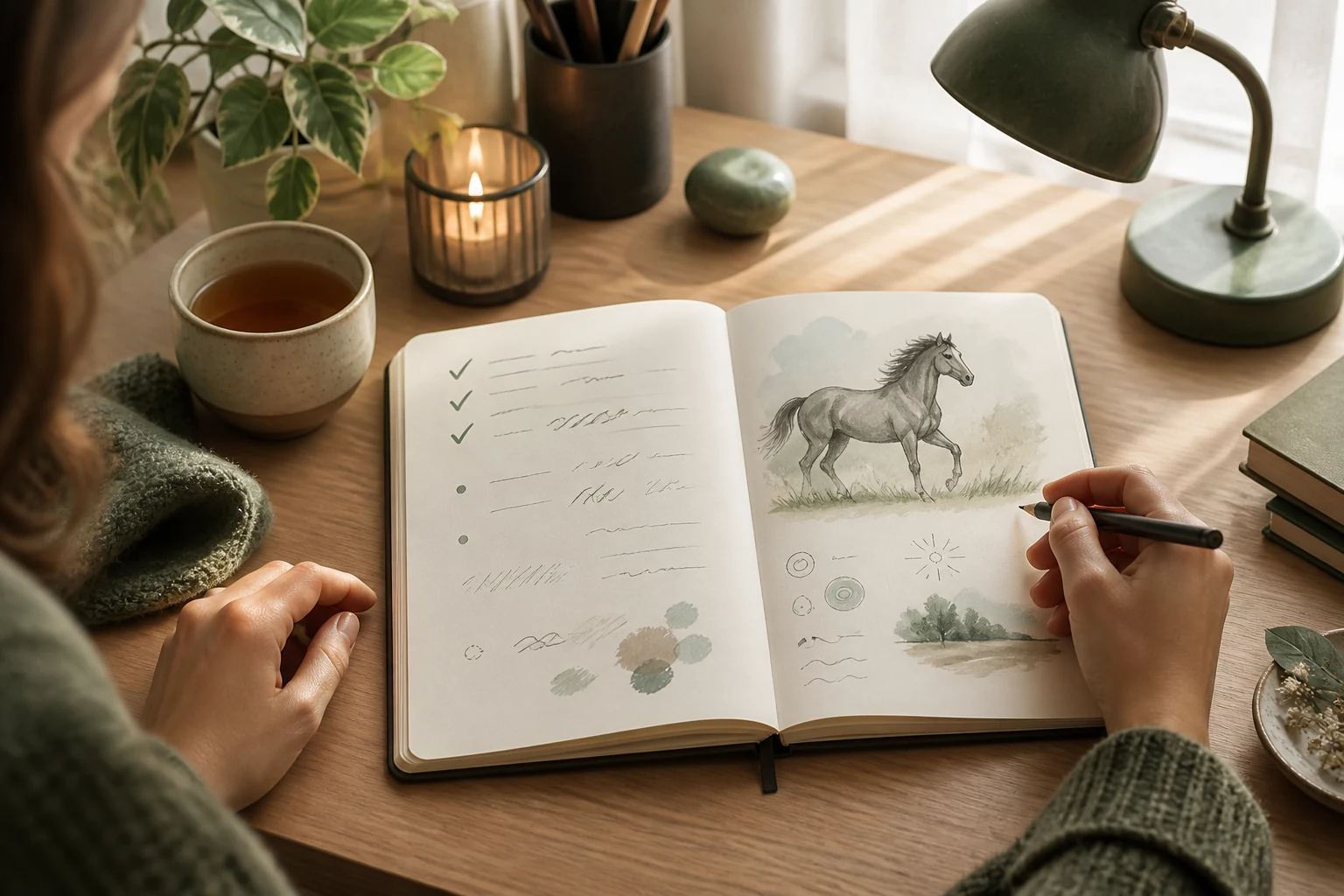
Write down what happens in plain language. Do you see color? Shape? A location? Movement? Do you know facts but see nothing? Are you relying on inner speech? Can you draw from memory even without a picture? These notes are often more useful than a single label because they describe your actual thinking style.
You can also ask trusted friends how they experience the same prompt. Their answers may vary more than you expect. One person may see a horse face in detail; another may see a generic outline; another may imagine the sound of hooves. Hearing those differences can reduce the feeling that there is one normal way to imagine.
A Calm Next Step After the Aphantasia Horse Test
The aphantasia horse prompt is best treated as a doorway, not an answer key. It can show whether a word turns into a mental picture, but it cannot capture your whole imagination, memory, creativity, or intelligence. It also cannot tell you what your experience should mean emotionally. Some people feel relief, some feel puzzled, and some simply feel interested.
If you want a clearer next step, use the prompt to guide a broader reflection. Compare your horse response with other scenes, notice whether your imagery is visual or non-visual, and keep the tone curious. A structured mind's eye reflection tool can help organize that exploration while keeping the focus on insight rather than labels.
The most helpful question is not "Did I fail to imagine a horse?" It is "What did my mind do instead?" The answer may point toward words, concepts, spatial understanding, emotional memory, or practical reasoning. That is still imagination. It simply may not arrive as a picture.
FAQ
What does a person with aphantasia see when asked to picture a horse?
Many people with visual aphantasia report seeing no voluntary mental image. They may still know what a horse looks like, describe its features, recognize one easily, or think about it through words and facts. Some people also have faint impressions, flashes, or non-visual associations, so experiences vary.
Is the aphantasia horse test the same as an aphantasia test?
No. The horse prompt is a quick self-observation exercise. A fuller self-assessment usually asks several imagery questions across different scenes and vividness levels. One prompt can start the conversation, but it should not be treated as a complete measure of visual imagery.
Why do people also use the apple prompt?
The apple prompt is simple, familiar, and easy to compare across people. The horse prompt can reveal additional details such as movement, posture, face shape, and setting. Trying both can help you notice whether your response changes with object complexity.
Is aphantasia a form of autism?
Aphantasia is not the same thing as autism. Some research explores overlaps between imagery differences and neurodivergent traits, but one does not automatically imply the other. If you have questions about autism, daily functioning, or mental health, seek guidance from an appropriate professional.
Is aphantasia linked to high IQ?
There is no simple rule that aphantasia means higher or lower intelligence. People with low visual imagery can be strong in many areas, including language, logic, spatial reasoning, design, science, or creative work. Imagery style is only one part of cognition.
Is aphantasia really that rare?
Aphantasia appears to be uncommon but not vanishingly rare. Estimates vary by study and definition, often landing in the low single digits of the population. Many people only discover the term after realizing that others experience mental pictures differently.
Can I have aphantasia if I still dream or recognize faces?
Yes, possibly. Voluntary visualization, dreaming, recognition, memory, and face processing are related but separate experiences. Some people with aphantasia report visual dreams or normal object recognition. Others notice challenges with autobiographical detail or faces. Your pattern may be individual.