Aphantasia Cure Fact Check: Treatments and Visualization Exercises
If you have recently discovered that most people can "see" images in their minds while you see only darkness, you are likely asking one burning question: "Is my mind's eye broken, and can I fix it?" You are not alone in this search. For many, realizing they have aphantasia triggers a mix of confusion and a strong desire for a solution—an aphantasia cure.
While current scientific consensus classifies aphantasia as a stable cognitive trait rather than a disorder, emerging research into neuroplasticity offers a glimmer of hope. This guide cuts through the noise to explore the scientific reality of "curing" aphantasia, actionable visualization exercises that might help strengthen your mental imagery, and how to embrace your unique cognitive style. Whether you are looking for training techniques or simply peace of mind, understanding your starting point by taking a reliable aphantasia test is the first step toward clarity.
Is There a Cure for Aphantasia: The Scientific Reality
When discussing an aphantasia cure, it is crucial to manage expectations. The internet is full of anecdotal claims, but what does science actually say?
The Medical Consensus: No "Standard" Cure Yet
Currently, there is no pill, surgery, or standardized medical treatment that can "cure" aphantasia. Most neurologists and cognitive scientists view aphantasia not as a disease that needs fixing, but as a variations in human experience—much like being left-handed or having perfect pitch. Because it is not a pathology, the medical community focuses less on "cures" and more on understanding how aphants process information differently.
Understanding the Spectrum: Condition vs. Neuro-variation
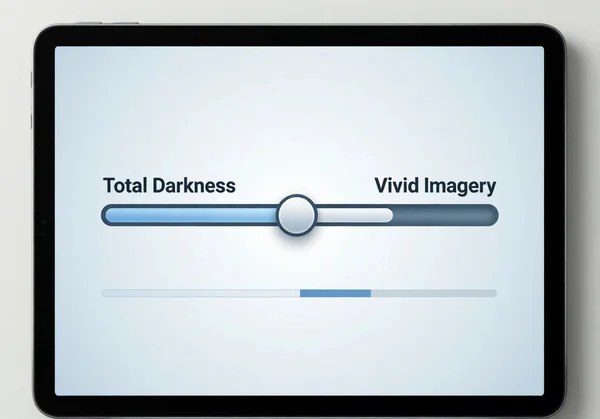
It is helpful to view visualization on a spectrum. On one end, you have hyperphantasia (extremely vivid imagery), and on the other, aphantasia (no imagery). Most people fall somewhere in the middle. Framing your experience as a position on this spectrum, rather than a binary "broken/fixed" state, can reduce anxiety. While you cannot simply "switch on" your mind's eye overnight, you can explore the potential for change through training.
Understanding Neuroplasticity: How the Brain Can Change
If there is no medical cure, why do some people claim they learned to visualize? The answer lies in neuroplasticity—the brain's remarkable ability to reorganize itself by forming new neural connections.
Rewiring the Visual Cortex
Research suggests that the visual cortex in people with aphantasia works differently, not that it is dormant. Neuroplasticity implies that with targeted, repetitive stimulation, the brain can potentially strengthen the neural pathways responsible for voluntary imagery. This isn't a guaranteed "cure," but it provides the biological basis for why visualization exercises might work for some individuals.
The "Mental Muscle" Analogy
Think of your mind's eye as a muscle that has never been used. If you tried to lift a heavy weight with a weak muscle, you wouldn't be able to do it. However, with consistent, specific training, that muscle can get stronger. Similarly, the goal of "curing" aphantasia might be better framed as "training" a weak cognitive function. The results vary wildly from person to person, but the potential for growth is there.
4 Visualization Exercises to Strengthen Your Mind's Eye
If you are willing to experiment, there are several techniques that the community and some researchers suggest may help spark visualization. These exercises to cure aphantasia—or more accurately, to develop mental imagery—require patience and persistence.
Method 1: Image Streaming (The Win Wenger Technique)
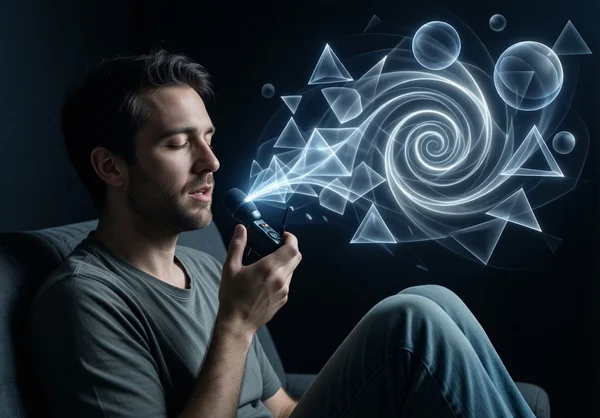
Image streaming is perhaps the most well-known technique discussed in aphantasia circles.
- The Concept: You describe out loud, in rapid-fire detail, the flow of impressions in your mind, no matter how faint.
- How to Do It: Close your eyes. Even if you see nothing but black (Eigengrau), start describing the "texture" of the blackness, or any fleeting conceptual associations. Speaking aloud is key—it creates a feedback loop that reportedly stimulates the visual cortex.
Method 2: Memory Recall Practice (The "Apple" Test)
- The Concept: Using memory as a gateway to visualization.
- How to Do It: Look at a simple object, like a red apple. Study it for 30 seconds. Close your eyes and try to recall one specific detail, like the curve of the stem or the shine on the skin. Don't try to see the whole apple; just hunt for a "glitch" of visual memory. Open your eyes, check, and repeat.
Method 3: Sensory Focus Training (Non-Visual)
- The Concept: Strengthening other senses to "triangulate" vision.
- How to Do It: Focus intensely on hearing a sound in your mind (e.g., a car horn) or feeling a texture (sandpaper). By engaging the brain's sensory simulation networks, you may indirectly prime the visual centers to become more active.
Method 4: After-Image Concentration (Trataka)
- The Concept: Using the physiological after-image from a light source to bridge into mental imagery.
- How to Do It: Stare at a high-contrast image (like a candle flame or a black dot on white paper) for 60 seconds. Close your eyes and watch the negative after-image fade. Try to "hold" onto that fading image with your mind, extending its duration.
Success Stories vs. Anecdotal Evidence: What the Community Says
On platforms like Reddit, you will find threads titled "I cured my aphantasia." While encouraging, it is vital to approach these with critical thinking.
Real Stories from the Aphantasia Community
Many users report moving from "total blackness" to "vague, involuntary flashes" after months of image streaming. Success is rarely a sudden switch to 4K mental cinema; it is usually a slow, incremental shift toward being able to summon shadowy shapes or brief impressions.
The "Cure" vs. "Improvement" Distinction
Most "success stories" are actually stories of improvement. A person might go from a 0/10 on the visualization scale to a 2/10. Is this a cure? Technically, no. But for someone who has never seen an image, a 2/10 is a world of difference. Setting your goal to "improvement" rather than "perfection" is a healthier and more realistic approach.
Living Well with Aphantasia: Why You May Not Need a "Cure"
Before you exhaust yourself with training, consider this: aphantasia comes with its own unique strengths.
The Logic & Verbal Advantage
Without the distraction of mental images, many people with aphantasia excel at verbal, analytical, and logical tasks. Your brain may be more efficient at processing abstract concepts because it doesn't waste energy constructing visual simulations.
Reduced Visual Trauma & Anxiety
One hidden benefit often cited is a resilience to PTSD. Because people with aphantasia cannot visualize traumatic memories, they may be less prone to the "flashbacks" that plague others. Your "blind mind's eye" might actually be a protective mechanism.
Discover Your Cognitive Profile (Self-Reflection Bridge)
Understanding how you think is far more valuable than trying to force your brain to be something it's not. Whether you are trying to "cure" aphantasia or just understand it, clarity is power.
The Visual Spectrum: From Phantasia to Aphantasia
Many people confuse "weak visualization" with total aphantasia. Do you see absolutely nothing, or just dim, fuzzy shapes? Knowing exactly where you fall on the spectrum can save you months of unnecessary worry.
Explore Your Mind with Our Educational Assessment
Rather than guessing, you can use a structured tool to evaluate your imagery vividness. Our platform offers a specifically designed online aphantasia test that helps you map your cognitive profile. This isn't a medical diagnosis, but a tool for self-discovery—helping you understand if you should focus on potential training or embrace your unique non-visual mind.
Final Thoughts: Embracing Your Mind
The journey of understanding aphantasia is often more about acceptance than cures. Whether you choose to try image streaming or simply celebrate your unique cognitive strengths, remember that your mind is functional and capable. For deeper insights into your specific patterns, take a moment to check your traits with this aphantasia test to see where you truly stand on the spectrum.
Frequently Asked Questions About Aphantasia Recovery
Is aphantasia caused by trauma?
Some research suggests that aphantasia can be psychogenic (caused by psychological factors like trauma or depression), but for the vast majority, it is congenital—meaning you were born with it. If yours is acquired suddenly, seeing a doctor is recommended.
Is aphantasia genetic or learned?
Evidence points strongly to genetics. Aphantasia tends to run in families, suggesting it is a biological trait rather than a learned habit or a result of "not trying hard enough."
Can I still dream if I have aphantasia?
Yes! Surprisingly, many people with aphantasia report having vivid visual dreams. This suggests the hardware for imagery works; the "software" for voluntary access is just different.
Does aphantasia affect intelligence?
Absolutely not. There is no correlation between aphantasia and low IQ. Many brilliant artists, scientists (like Craig Venter), and animators have aphantasia. Your intelligence is not defined by your ability to visualize.
Disclaimer: The information and exercises provided in this article are for educational purposes only and do not constitute medical advice. Aphantasia is not a recognized medical disorder requiring treatment. If you experience sudden vision loss or cognitive changes, please consult a medical professional.